Home   >   Archives for cesar crisosto
News

One death every 20 seconds: chronic kidney disease emerges as one of the world’s fastest-growing health threats

Every 20 seconds, somewhere in the world, a person dies from chronic kidney disease. Most of them never saw it coming. The condition progresses quietly, often without symptoms, until the damage is already severe. Now, new research involving scientists from across Europe warns that this silent disease is already affecting hundreds of millions of people, and could soon become one of the leading causes of death in Europe.

Chronic kidney disease rarely makes headlines. It progresses quietly, often without symptoms, slowly damaging one of the body’s most essential organs. Yet a new international study warns that this largely overlooked condition is already affecting hundreds of millions of people worldwide, and its impact is only growing.

According to the latest research, involving Professor Alberto Ortiz (Fundación Jiménez Díaz-Universidad Autónoma Madrid) , a partner in the European KitNewCare project, chronic kidney disease (CKD) now affects around 850 million people globally and causes about 1.5 million deaths every year: the equivalent of one death every 20 seconds.

The figures come from updated analyses linked to the Global Burden of Disease Study, the largest effort to map health trends worldwide. What emerges from the data is a troubling picture: while progress in prevention and treatment has reduced mortality from many major diseases, kidney disease is moving in the opposite direction.

By 2050, researchers warn, chronic kidney disease could become the third leading cause of death in Western Europe, overtaking many conditions that have traditionally dominated public health priorities.

The scale of the problem is difficult to grasp at first glance. Across Europe alone, an estimated 93 million adults live with chronic kidney disease, and around 210,000 people die from it every year: one death every two and a half minutes.

Yet despite these numbers, CKD remains one of the most under-recognised global health threats. Unlike heart disease or cancer, kidney disease often advances unnoticed. Many patients do not realise anything is wrong until their kidneys have already suffered significant damage.

In clinical terms, chronic kidney disease is diagnosed when the kidneys’ ability to filter waste from the blood declines or when early markers of kidney damage persist for more than three months. But because the condition progresses slowly and silently, large numbers of people remain undiagnosed, even though early detection could dramatically change the course of the disease.

This lack of awareness has real consequences. When kidney disease advances to its final stages, patients may require kidney replacement therapy (dialysis or transplantation) simply to stay alive.

Globally, more than 4.6 million people now rely on dialysis or kidney transplants, a figure that has nearly tripled since 1990.

These treatments are life-saving, but they do not fully replace the complex functions of healthy kidneys. Patients undergoing dialysis can face dramatically shortened life expectancy, sometimes more than 40 years less than the general population, while even transplant recipients may live around two decades less than people without kidney disease.

Behind these stark statistics lies a paradox. In recent decades, major advances in public health have significantly reduced deaths from conditions such as stroke and heart disease, thanks to strong prevention strategies, early screening programmes and targeted treatments. Kidney disease, however, has not benefited from the same level of attention.

The new analysis suggests that this imbalance may soon reshape the global health landscape. While deaths from cardiovascular disease are projected to decline substantially in the coming decades, the burden of chronic kidney disease is expected to continue rising.

For researchers, the message is clear: the fight against kidney disease must begin much earlier.

Simple and inexpensive tests (such as measuring albumin in urine, an early signal of kidney damage) could allow doctors to detect the disease years before symptoms appear. Early interventions can delay kidney failure by decades, preventing suffering for patients and reducing the enormous costs associated with dialysis and transplantation.

The study also highlights inequalities in access to treatment across Europe. In some countries, patients are far more likely to receive kidney transplants than in others, revealing important differences in healthcare systems and treatment availability.

Ultimately, the findings point to a broader challenge for health systems worldwide. As populations age and chronic diseases become more common, kidney health is emerging as a critical piece of the puzzle, one that cannot remain in the shadows.

For the KitNewCare project, which focuses on building more sustainable and patient-centred kidney care pathways, the research reinforces the urgency of improving prevention, diagnosis and treatment across Europe.

Because behind the statistics lies a simple truth: while chronic kidney disease may progress silently, its impact on patients, families and healthcare systems is anything but quiet.

And unless stronger action is taken, the world may soon discover that one of its most dangerous epidemics has been hiding in plain sight.

Read the paper here

*Cover photo by CDC on Unsplash

March 13, 2026
Home   >   Archives for cesar crisosto
News

World Kidney Day 2026: Turning Sustainability into Action

Sustainability in healthcare is no longer a distant goal, it is an urgent responsibility. As World Kidney Day 2026 approaches, KitNewCare partners across Europe are launching a series of webinars that explore how kidney care can evolve to meet the environmental, social and economic challenges of our time.

World Kidney Day has always been a moment to reflect on prevention, care and equity.

In 2026, for the KitNewCare project, it also becomes a moment of responsibility.

Kidney care is life-saving, but it is also resource-intensive. Dialysis alone consumes vast amounts of water, energy and materials. The question is no longer whether healthcare must respond to climate change. The question is how fast we can transform it, without compromising quality of care.

To mark World Kidney Day 2026 (12 March), KitNewCare partners across Europe are hosting a dedicated series of webinars designed to explore exactly that: how to make kidney care environmentally sustainable, economically responsible and socially fair, in practice (not just in principle).

Over one week, we move from vision to implementation, from innovation to patient voice, from technology to education.

Programme

🗓 12 March 2026 – 10:00 CET

“Sustainable Kidney Care: From Vision to Practice”

🔗 Registration

Sustainability in healthcare is often discussed at a strategic level. But what does it truly take to embed it in everyday clinical settings?

This opening session examines the contextual factors that determine whether sustainability becomes part of routine practice or remains an aspiration. It explores leadership, governance, culture and system-level enablers — the conditions that allow sustainable kidney care to move from concept to operational reality.

Speaker:

  • Daniel Eriksson, CEO, Nordic Center for Sustainable Healthcare

🗓 17 March 2026 – 11:00 CET

“Optimising Kidney Care Pathways: From Insight to Implementation”

🔗 Registration

How do kidney centres make sustainable change happen?

This webinar will explore the journey of planning and implementing sustainable change, with two of the KitNewCare clinical partner sites sharing their real-world experiences of optimising kidney care pathways. From mapping current practice and engaging frontline teams, to embedding changes into everyday care, the session highlights practical lessons, enablers, and transferable insights for any kidney service.

Speaker:

  • Dr Zuzanna Jakubowska, Warszawski Uniwersytet Medyczny (WUM)
  • Giuseppe Di Chiaro, Ph.D Researcher, Università degli Studi di Modena e Reggio Emilia (UNIMORE)
  • Harriet Attwell-Rogers, KitNewCare Project Manager – Organisational and Workflow Optimisations, Centre for Sustainable Healthcare

🗓 18 March 2026 – 10:00 CET

“Green Dialysis Technologies: Innovations and Pathways Forward”

🔗 Registration

Dialysis is both indispensable and environmentally demanding. Can innovation reshape this reality?

This webinar explores technological solutions aimed at reducing water consumption, waste production and carbon footprint in dialysis treatment. It will examine how emerging technologies — when paired with systemic thinking — can significantly lower environmental impact.

Speakers:

  • Karin Gerritsen, Associate professor (UMC Utrecht)
  • Tibo Verburg, MSc

🗓 19 March 2026 – 16:00 CET

“Sustainable Kidney Care: Listening to Patients in Times of Climate Change”

🔗 Registration

Sustainability cannot exist without listening.

Climate change disproportionately affects vulnerable populations, including people living with chronic kidney disease. This session shifts the focus toward patient experience, exploring how environmental sustainability intersects with quality of care, equity and access.

Speaker:

  • Paulo Zoio, Policy Officer, Portuguese Directorate General for Energy and Geology
  • Rajmund Michalski, Professor, Institute of Environmental Engineering of the Polish Academy of Sciences in Zabrze

23 March 2026 – 16:00 CET

“Teach Yourself Sustainable Kidney Care”

🔗 Registration

Knowledge is the foundation of change.

This closing session introduces the updated Sustainable Kidney Care learning modules, developed to build capacity across Europe. These educational resources empower healthcare professionals to identify environmental hotspots, apply sustainability principles and actively contribute to climate-neutral healthcare systems.

Speakers:

  • Furat Al-Murani (Centre for Sustainable Healthcare)
  • Stefi Barna (Centre for Sustainable Healthcare)

A Broader Transformation

Through this World Kidney Day series, KitNewCare demonstrates that sustainability in kidney care is not a separate agenda, it is inseparable from quality, efficiency and equity.

The programme reflects the project’s integrated approach:

  • Identifying environmental, social and economic hotspots
  • Testing and validating technological and organisational innovations
  • Developing benchmarking tools
  • Building a sustainability piloting network
  • Strengthening capacity across Europe

World Kidney Day 2026 becomes more than a campaign. It becomes a collective step towards reshaping how kidney care is delivered in a changing climate.

We invite healthcare professionals, administrators, policymakers, industry representatives, researchers and patient advocates to take part in this conversation, and in this transformation.

Because sustainable kidney care is no longer optional. It is the future.

March 2, 2026
Home   >   Archives for cesar crisosto
News

Call for applications: Become a KitNewCare associate pilot site

As healthcare systems across Europe seek to reduce their environmental footprint without compromising patient care, the KitNewCare project is inviting kidney care centres to join its next phase of pilot activities as Associate Pilot Sites.

Deadline has been extended: 13th March 2026

The KitNewCare project has launched a Call for Applications to recruit new Associate Pilot Sites, inviting kidney care centres across Europe to take part in the next phase of its work towards environmentally sustainable and climate-neutral kidney care.

Funded under Horizon Europe, KitNewCare is developing and testing practical tools, methodologies and care pathway improvements to help healthcare providers reduce the environmental footprint of kidney care while maintaining high clinical standards and patient-centred outcomes. To strengthen the real-world relevance and scalability of these solutions, the project is now expanding its network of clinical collaborators  .

What does it mean to be an Associate Pilot Site?

Associate Pilot Sites will support secondary pilot activities by testing and applying selected KitNewCare tools and approaches within their own clinical settings. These activities focus on assessing current practices, identifying sustainability hotspots, and exploring optimisation opportunities along the kidney care pathway.

Participation offers centres the opportunity to:

  • Benchmark their kidney care practices across environmental, clinical, economic and social dimensions

  • Engage with practical tools designed to support more sustainable and resource-efficient care pathways

  • Contribute operational insights and feedback to help refine solutions for broader European adoption

  • Become part of a Europe-wide community of healthcare professionals committed to sustainable healthcare transformation

Who should apply?

The call is open to kidney care centres, dialysis units and hospitals across Europe that are interested in improving the sustainability of kidney care services. Prior expertise in environmental assessment or sustainability metrics is not required, as guidance and structured support will be provided through the project.

Centres are expected to demonstrate motivation, organisational commitment and the capacity to engage in pilot activities within their routine clinical practice.

Contributing to system-level change in kidney care

By involving additional clinical sites, KitNewCare aims to ensure that its solutions are robust, transferable and adaptable to diverse healthcare contexts. Associate Pilot Sites play a crucial role in validating approaches beyond the initial pilot settings, helping to bridge the gap between innovation, everyday practice and long-term system change.

Participation also contributes to the project’s wider objectives of informing future clinical guidance, policy discussions and sustainability strategies in kidney care at European level.

How to apply

Interested centres are invited to download the Call for Applications and submit their expression of interest according to the instructions provided.

⬇️ Download the Call for Applications


*Photo by Tima Miroshnichenko

January 22, 2026
Home   >   Archives for cesar crisosto
Upcoming events

Save the date: Innovation Challenge 2 to accelerate sustainable kidney care across Europe

KitNewCare will hold its second Innovation Challenge on 15 December, bringing together clinical partners, sustainability experts and industry stakeholders to reflect on the project’s first round of environmental audits and identify the priority innovations needed to advance greener kidney care across Europe.

The KitNewCare project is preparing to host its Innovation Challenge 2 (IC-2), a focused workshop bringing together clinical partners, sustainability experts and industry innovators to advance the project’s mission: improving the environmental performance of kidney care across Europe. Taking place on 15 December, this new edition builds on the strong foundations of Innovation Challenge 1, held last year in Malmö, and adds a new layer of insight—direct reflections from the first round of environmental audits carried out in real clinical settings.

The first Innovation Challenge, organised in October 2024, gathered more than 30 participants from across the project and the wider healthcare ecosystem. Led by the System Design Lab of Politecnico di Torino, that session combined presentations from clinical and industrial partners with hands-on system-thinking exercises. Participants analysed sustainability impacts within kidney care and explored emerging technologies ranging from nature-based water treatment to advanced resource-efficiency solutions.

One of the most valuable outcomes of IC-1 was a shared understanding of where innovation can meaningfully reduce the environmental footprint of renal care while improving patient and clinic workflows. IC-2 now takes this a step further by integrating practical evidence gathered in the field.

Over the past months, KitNewCare partners have conducted environmental audits across multiple European clinics. These audits assessed material flows, energy consumption, water use, waste streams and everyday operational practices in haemodialysis and peritoneal dialysis.

IC-2 will use this evidence base to address three key objectives:

  • Reflect on the sustainability audits and what they reveal about real-world kidney care processes.
  • Explore key learnings directly from clinics, identifying what is working, what is challenging, and what sustainability priorities emerge from their perspective.
  • Connect these insights to the project’s catalogue of innovations, ensuring that technical solutions under consideration respond to actual clinical needs.

The session will open with a welcome and project update from Prof. Brett Duane (TCD), followed by Daniel Eriksson (NCSH) presenting an overview of audit activities and the draft consolidated report.

Clinical partners from Utrecht, Warsaw and Madrid will then share their experiences, addressing the following subjects:

  • Data collection challenges in sustainability audits: practical difficulties, resource needs and insights gained from the audit process.
  • Systemic understanding of sustainability in kidney care: how audits help clinics see environmental impacts across the full care pathway.
  • Clinic-specific barriers to sustainability progress: organisational, technical or infrastructural constraints identified by partners.
  • Priority areas for technical improvement: the top sustainability hotspots and the technologies or processes that clinics consider most urgent to address.
  • Strategic next steps for integrating audit findings: how lessons learned should shape future work, innovation selection and the project’s overall sustainability roadmap.

The session will conclude with an open discussion and alignment on next steps towards integrating audit findings into the innovation roadmap.

Innovation Challenge 2 marks an important turning point for KitNewCare. By merging technology scouting, cross-sector engagement, and now clinic-level evidence, the project is progressively shaping a systemic understanding of how sustainability can be embedded in kidney care services—from equipment and water treatment to workflow design and patient-centred practices.

The outcomes of IC-2 will feed directly into the refinement of the project’s innovation catalogue and support the development of practical guidelines to help clinics transition toward more sustainable operations.

*Photo by Artem Podrez.

December 9, 2025
Home   >   Archives for cesar crisosto
Journalistic articles

Green kidneys: solving nephrology’s climate paradox

If the healthcare sector were a country, it would rank fifth among the world’s biggest emitters. Kidney disease, a silent threat affecting over 100 million Europeans, is treated through a highly polluting system now being tackled with a technology- and education-driven approach toward cleaner, smarter nephrology. Yet, the World Health Organization reminds us: “The greenest cure is prevention.”

By Marie Jamet

There is something rotten in the state of humans. The more we push the climate to change, the sicker we get, hence the more we need healthcare. The more healthcare we consume, the more it contributes to global emissions, and so the vicious circle is complete.

Because of this paradox, healthcare now accounts for around 4.5% of all global emissions, according to a study by The Shift project. The World Health Organization (WHO) report for the first Health summit at COP29 in Baku on November 2024 states that “If the healthcare sector were a country, it would rank as the fifth-largest emitter worldwide”.

The paradox is especially true of nephrology. A hundred million Europeans already suffer from chronic kidney disease. A meta study evaluated that for every 1°C rise in temperature during heatwaves, there was a 1% increase in renal complications.

Dialysis “has a really high carbon footprint compared with most other health interventions[…]”

Moreover, nephrology is a heavy contributor to healthcare’s carbon footprint. Issues come from different sources: the main treatment, haemodialysis, requires large amounts of treated water that is largely wasted. It generates significant waste, particularly plastic, and requires patients to visit hospitals three times weekly, mostly by car.

Around 7 tonnes of CO2eq are emitted per dialysis patient annually, compared to 0.4 tonnes per patient across all UK’s National Health services, a British study showed. The French-speaking society of nephrology, dialysis, and transplantation (SFNDT) estimates that a kidney patient consumes 60m³ of water annually in dialysis, adding to the 53m³ each inhabitant already consumes. Dialysis “has a really high carbon footprint compared with most other health interventions, because people are on dialysis for quite a while. It’s a huge amount of resources, a huge amount of energy, a huge amount of water,” explains Brett Duane, public health specialist and coordinator of KitNewCare, a European project aiming to reduce kidney care’s carbon footprint.

“Information is power”

In France, Maryvonne Hourmant, former head of the Nephrology and clinical immunology department at Nantes University Hospital and the then president of the SFNDT created a dedicated work group on sustainability around 2020. The green nephrology group published a guide focusing on dialysis in 2023. She was inspired by studies by British and Australian colleagues. Now retired, she keeps pushing the subject and has joined the Sustainable Nephrology Task Force within the European Renal Association (ERA).

“there is reluctance among professionals to adopt new things”

The French group feeds trainers with climate change facts and data to both professionals and patients. Hourmant states that among professionals, “young nephrologists, in particular, and young people in general are very interested, and also very worried, about ecology and climate change.” She acknowledges that “there is reluctance among professionals to adopt new things”. But progress comes through ”multi-professional green teams, whose coordination is assigned to someone who is truly motivated, but who is not necessarily a nephrologist,” explains Hourmant, adding: “Even if they start with three or four people, they bring the others on board because there are results. We value these results: we make posters [with these results]’. In short, we show the positive results. And that motivates others to participate.”

[KitNewCare] aims at tackling the whole chain of decarbonising nephrology with “a comprehensive approach,”

Marta Arias, nephrologist at Hospital Clínic Barcelona and education coordinator for the European project KitNewCare, describes a “snowball effect” driven by social contagion, how individual actions and awareness can inspire others and gradually shift professional culture.

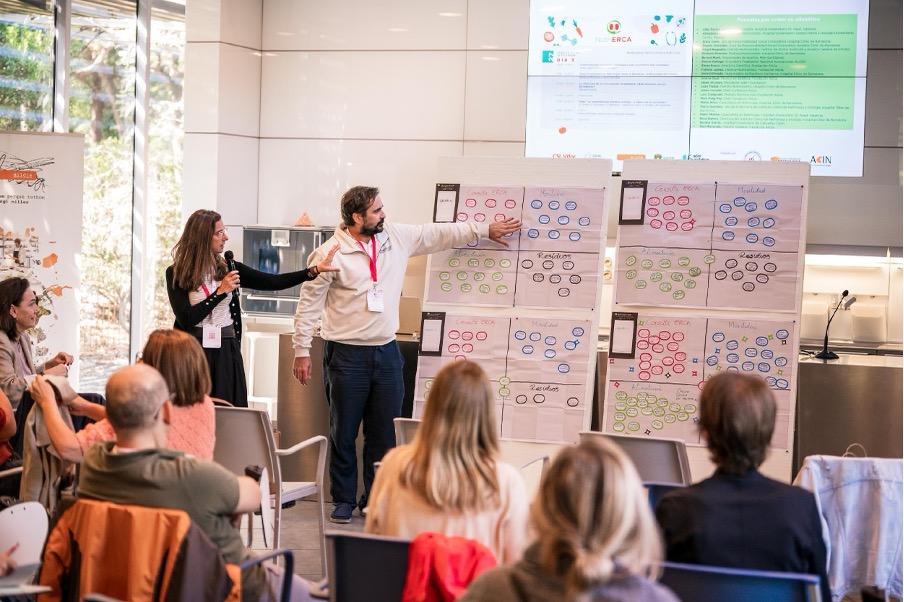
Training nephrologists and nutritionists to a greener approach to nutrition for chronic kidney disease patients

Training nephrologists and nutritionists to a greener approach to nutrition for chronic kidney disease patients – Photo courtesy of Joan Gosa

It comes from those Arias called the “champions”, people who are already into sustainability on a personal level. Data-driven, the project aims at tackling the whole chain of decarbonising nephrology with “a comprehensive approach,” as Duane says, tackling all aspects in parallel: data, education, and technology. From Arias’ experience, change comes from both climate information and simple actions like reminder stickers to switch off lights. Like Hourmant, she recognises that “it is difficult to change habits,” but adds, “we have to keep going. Information is power.” Her goal, she says, “is to raise awareness of the state of the world in terms of climate change, to present the data and show how climate change affects kidney health, and how nephrology itself contributes to climate change”, hoping that this information will stick and help professionals make other choices back in their hospital. These trainings are aimed at all health professionals: nurses, nephrologists, managers, but also nutritionists and dieticians, as education on nutrition can both have an impact on climate and patients’ health. She considers that “the future lies in education, beginning with medical students”.

Beyond education, working on a cleaner dialysis

Despite growing awareness, dialysis technology still weighs heavily on kidney care’s carbon footprint. Aligned with the EU climate law objectives, KitNewCare “seeks to reduce the water consumption, energy consumption, and the waste generation […] to reduce the burden of dialysis”. Karin Gerritsen, internist-nephrologist, associate professor at UMC Utrecht and technical coordinator, adds that the focus is “on dialysis because this is where the technological improvements can be made.”

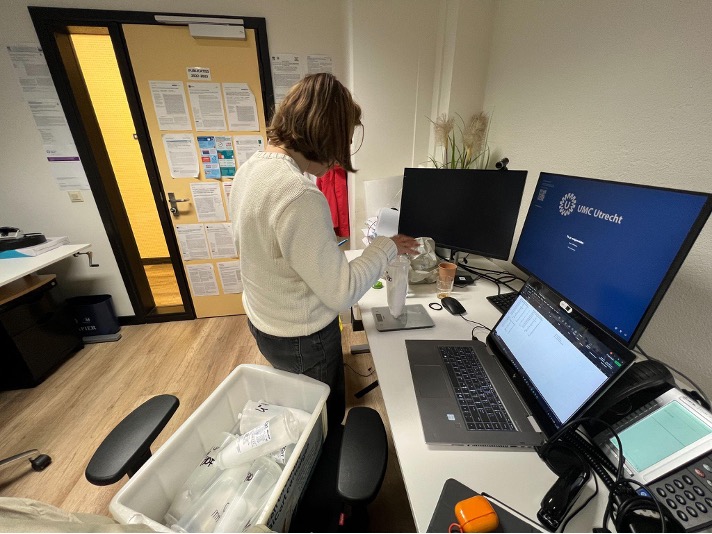
Weighing of the bicarbonate cartridges in a dialysis center at UMC Utrecht

Weighing of the bicarbonate cartridges in a dialysis center at UMC Utrecht – Josje Smulders

Several innovations build on European trials: one reuses wastewater from the purification process to flush toilets, another redesigns the water treatment sequence to boost water recovery rates, transitioning from reverse osmosis to forward osmosis technology. An FDA-approved American device that regenerates dialyzers, the fully plastic, single-use filtering membranes discarded after each dialysis session, is being evaluated for CE certification, which would “significantly lower the footprint of dialysis,” says Gerritsen. An Asian model is also being assessed to tackle the second major carbon “culprit”: bicarbonate cartridges that deliver the alkaline component during dialysis. Rather than relying on plastic canisters, this approach would “make the alkaline components at the central location [within the hospital], and redirect [them] to the new dialysis machines,” describes Gerritsen. A final innovation involves a machine that decontaminates biohazardous waste on-site, enabling recycling instead of incineration.

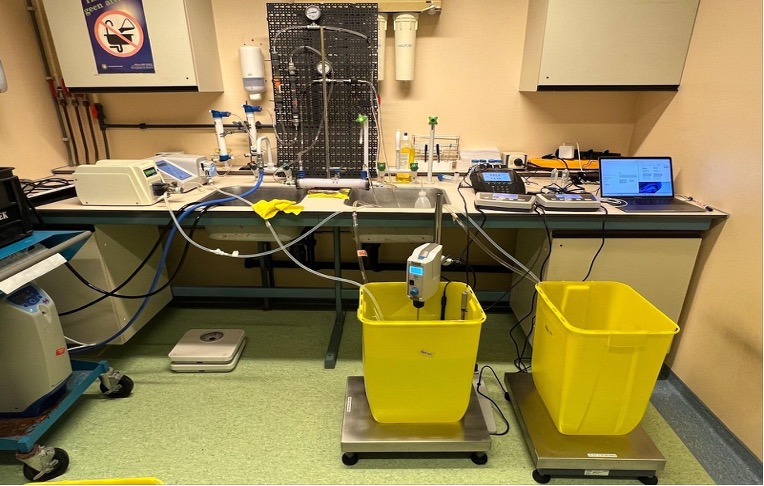
Experimental setup at UMC Utrecht

Experimental setup at UMC Utrecht – Photo by Jan Tsai

While innovations could reduce the environmental burden of dialysis, avoiding this treatment altogether is the greenest solution. Transplantation offers a major improvement: “once people get a kidney transplantation, the environmental footprint almost goes away,” Duane reminds us. Gone are the three times a week travels to the hospital, gone are the plastic and water waste.

Yet, transplantation carries the smaller burden of required medication and the risk of new surgery. Both Gerritsen and Duane explain that the most low-carbon solution is prevention: “If you detect the disease at an early stage, then you can perhaps prevent dialysis. That would make the most impact”.

Chronic kidney disease is a silent illness. Most patients learn of it once it is too late for a lighter treatment.Urine tests currently being tested in Spain could enable earlier diagnosis. The World Health Organisation (WHO), in the report for COP29 health summit, advocates this preventive approach, which “results in healthier patients, less use of the medical system and resources, and lower emissions.”

Prevention requires public action and political will, but lowering emissions would lead to fewer chronic illnesses and reduced need for the healthcare system, whose carbon footprint would shrink. And so the initial vicious circle is reversed.

November 25, 2025
Home   >   Archives for cesar crisosto
News

How green is Kidney Care? New research sheds light on the environmental impact of haemodialysis

Dialysis saves lives, but at what environmental cost? A new study from the KitNewCare consortium offers detailed calculation of the carbon and water footprint of haemodialysis, and points to practical solutions for making kidney care more sustainable

A new open-access study from the KitNewCare consortium asks a simple question with complex implications for hospitals across Europe: how green is kidney care, really? Published in the Clinical Kidney Journal by Oxford University Press, “But how green is it actually? Calculating the environmental footprint of kidney care environmental optimisations within haemodialysis” quantifies the carbon and water impacts of common dialysis practices and a set of practical changes designed to reduce them.

The authors apply attributional life-cycle assessment, aligned with ISO 14040 and the EU’s Product Environmental Footprint guidance, using OpenLCA and the Ecoinvent database to compare interventions across five areas: procurement and resource use, energy, patient travel, water conservation, and waste management. Alongside environmental results, the work is framed within a triple-bottom-line perspective, with social impacts such as risks of forced labour addressed within the programme of research. The approach moves the sustainability discussion beyond good intentions by putting numbers on everyday decisions inside dialysis units.

Several findings stand out for clinicians and managers planning change. Reducing patient travel consistently delivered the largest greenhouse-gas savings among the scenarios tested, confirming the value of measures such as home therapies, telemedicine support, and more efficient transport arrangements, while recognising that local service design will shape what is feasible. Shifts in clinical practice can also be high impact: adopting incremental haemodialysis, where clinically appropriate, cut both CO₂ emissions and water use in the modelled year of treatment (316 kg CO₂e and 137 m³, respectively). On the energy side, on-site solar generation produced the greatest gains among technical measures modelled (646 kg CO₂e and 52 m³ saved), with heat-exchange systems and automatic IT shutdowns offering further, smaller reductions. The authors note that national electricity mixes influence achievable benefits, so procurement and estates decisions should be tailored to context.

Attention to seemingly minor items also adds up. Eliminating cotton blankets, a textile with a sizeable water and carbon footprint, yielded notable savings in the modelling (116 kg CO₂e and 899 m³ per year of thrice-weekly haemodialysis), while pre-ordering meals to cut canteen waste saved a further 53 kg CO₂e and 90 m³. Some changes, such as switching lightbulbs in isolation, made negligible difference, underlining the value of prioritising the big wins first.

Waste and water strategies matter, even if their contributions vary by site. The paper reviews options from better segregation and recycling to advanced treatments such as pyrolysis that can shift waste from clinical to domestic streams, reducing disposal burdens and costs. It also highlights the growing practice of reclaiming reverse-osmosis reject water for non-potable uses within hospitals. The analysis reminds readers that water and carbon footprints are often correlated, so projects that save water can bring parallel climate benefits.

Procurement choices run through the results. Moving from liquid to powder or semi-dry concentrates, or mixing dialysate in-centre, can cut packaging, storage and transport emissions while improving cost-efficiency. Beyond the dialysis room, catering policies offer another lever, with plant-based options capable of reducing the carbon footprint of a meal by up to half, a change that aligns clinical environments with wider institutional sustainability goals. The study’s consistent message is that environmental performance improves fastest when high-impact actions are prioritised, clinically appropriate, and adapted to local realities.

For health-service leaders, the value of this work lies in its translation of sustainability into operational choices that protect patient outcomes. By quantifying what different optimisations can achieve in terms of carbon and water, the paper provides an evidence base for estates teams, nephrology services and procurement leads who are planning investment and service redesign over the coming years. It also complements European climate policy, which calls on health systems to contribute to emissions reductions while safeguarding quality of care.

The paper is available here.

August 18, 2025
Home   >   Archives for cesar crisosto
News

Small but mighty: your kidneys and the silent epidemic of chronic kidney disease

Your kidneys quietly save your life every day—yet chronic kidney disease silently threatens millions worldwide. Join us as we launch KitNewCare’s prevention campaign to uncover why these small, mighty organs deserve your attention now more than ever.

Imagine a disease that affects around 1 in 10 adults worldwide, yet most of those people don’t even realize they have it. This is the reality of chronic kidney disease (CKD), a progressive loss of kidney function that often flies under the radar. In 2021, CKD was estimated to impact 673 million people globally (over 8% of the world’s population) . It predominantly strikes older adults (about 20% of people over 55 have CKD) and is widely underdiagnosed . Health experts warn that CKD is a silent epidemic on the rise, projected to become the fifth leading cause of death in the world by 2050 . For context, CKD already rose from the 17th to the 10th leading cause of death between 1990 and 2020 . Yet, because it develops quietly, public awareness remains low.

Today marks the official launch of our social media awareness campaign, focused on the crucial topic of kidney disease prevention and, in this first article, we’ll explore why your kidneys, though small, are essential to your health, define what CKD is and its common causes, and explain why it often remains undetected until reaching advanced stages. Crucially, we’ll also highlight how early prevention and intervention can dramatically improve kidney health.

Kidneys: small but mighty organs

Your kidneys may be modest in size, each about the shape of a bean and the size of a fist, but they are powerhouse organs that perform a surprising array of life-sustaining jobs. Often called “small but mighty,” these two organs sit quietly in your lower back and keep you alive by performing critical balancing acts . Here are some of the vital functions your kidneys carry out every day :

  • Filtering waste and toxins from the blood: Kidneys act as the body’s natural filtration system, removing waste products and toxins which are then excreted in urine. This keeps your blood clean and chemically balanced.
  • Maintaining fluid and electrolyte balance: They regulate the amount of fluid in your body and the levels of key minerals (electrolytes) like sodium, potassium, calcium, and others. In doing so, kidneys also control blood pressure by adjusting how much water is excreted or retained . Think of them as the body’s internal “fluid thermostat,” ensuring you don’t retain too much water or dehydrate.
  • Regulating acid-base (pH) and blood chemistry: Kidneys fine-tune the pH of your blood (how acidic or alkaline it is) so that your body’s enzymes and processes can work optimally . They also keep the balance of salts and other chemicals in check, preventing harmful buildups.
  • Producing essential hormones: These organs aren’t just filters – they’re also factories for hormones. Kidneys release erythropoietin (EPO), a hormone that tells your bone marrow to produce red blood cells (preventing anemia) . They also produce renin, which helps regulate blood pressure, and Klotho, a hormone-protein that plays a role in healthy aging .
  • Keeping bones healthy: Ever wonder how you get vitamin D? In fact, your kidneys activate vitamin D into its usable form . This activated vitamin D is crucial for absorbing calcium and phosphate, which means strong, healthy bones. Without properly working kidneys, bone health can suffer.

In short, your kidneys are multitasking heroes – blood purifiers, fluid balancers, chemical regulators, hormone producers, and bone protectors all in one. It’s no exaggeration to say that if your kidneys fail, almost every system in your body is affected. This is why protecting these small but mighty organs is essential for a healthy life.

What is chronic kidney disease (CKD)?

Chronic kidney disease refers to a lasting impairment in kidney structure or function. In medical terms, CKD is defined by abnormalities of the kidneys (in their structure or their functions) that persist for more than 3 months and have implications for a person’s health. In other words, if your kidneys are damaged or not working properly for at least 3 months, and this is not just a short-term (“acute”) issue, it is classified as CKD.

CKD isn’t one single illness but rather an umbrella term that includes any condition that causes gradual kidney damage over time – regardless of the original cause. Some people’s CKD is mild and progresses very slowly, while others may worsen to the point of kidney failure. The progression often depends on the underlying cause and how well it’s managed. Let’s take a look at the common causes of CKD.

Causes of CKD

There are many potential causes of chronic kidney disease. Some are due to primary kidney problems, while others stem from diseases affecting other parts of the body. The most common causes include3:

  • Diabetes mellitus – Chronic high blood sugar from diabetes can damage blood vessels in the kidneys. In fact, diabetes is the number one cause of CKD worldwide.
  • Hypertension (high blood pressure) – Uncontrolled high blood pressure and other cardiovascular diseases can impair kidney arteries and filtering units, leading to CKD.
  • Glomerular diseases – Conditions that affect the kidney’s filtering units (glomeruli). These may be primary glomerular diseases (originating in the kidneys) or secondary to systemic illnesses. For example, certain autoimmune diseases attack the glomeruli.
  • Congenital or hereditary disorders – Genetic conditions and birth defects can result in abnormal kidney structure or function (for instance, polycystic kidney disease is an inherited cause of CKD).
  • Chronic interstitial nephritis – Diseases affecting the kidney’s tubules and surrounding tissues (the interstitium) can cause scarring over time. Chronic use of some medications or severe episodes of kidney inflammation can lead to this.
  • Long-term urinary tract obstruction – Blockages in urine flow, such as from kidney stones (nephrolithiasis), tumors, or an enlarged prostate, can back up pressure and damage the kidneys if not relieved.
  • Recurrent kidney infections – Frequent or inadequately treated kidney infections (pyelonephritis) or even recurrent lower urinary tract infections can cause scarring in the kidneys.
  • Systemic diseases – Certain whole-body diseases often involve the kidneys. Examples include lupus (an autoimmune disease), vasculitis (blood vessel inflammation), and multiple myeloma (a blood cancer). These conditions can directly or indirectly injure kidney tissue.

As this list shows, CKD has diverse causes – from lifestyle-related diseases like diabetes and hypertension, to genetic disorders and autoimmune conditions. What they all have in common is that they can lead to a gradual, often irreversible loss of functioning kidney tissue.

The “silent disease”: why CKD often goes undetected

One of the most dangerous aspects of chronic kidney disease is how sneaky it is. In the early stages, CKD typically has no noticeable symptoms . You can lose a significant amount of kidney function and feel perfectly fine. In fact, a person can lose up to 90% of kidney function before experiencing any symptoms at all . That’s why CKD is sometimes dubbed a “silent killer.” Many people living with CKD have no idea their kidneys are in trouble until the disease is very advanced.

Why so silent? The kidneys have a remarkable reserve capacity – they can compensate when some parts are damaged, and the healthy parts do extra work. Additionally, the human body can tolerate a gradual accumulation of waste up to a point without obvious signs. Any mild symptoms that do appear (like slightly reduced energy or subtle changes in urination) are easy to overlook or attribute to other causes. Usually, CKD in its early stages is only detected if you happen to get routine blood or urine tests (for example, as part of an annual physical or while checking for something else) . These tests might show an elevated blood creatinine (a waste product) or protein leaking into the urine – clues that the kidneys are struggling – even though you feel fine.

As CKD progresses to more advanced stages, however, signs start to surface. Because these signs come late, they are often non-specific, meaning they could be mistaken for other illnesses. Some symptoms of advanced CKD include :

  • Fatigue and weakness: As kidneys fail, anemia and toxin buildup can leave you feeling exhausted and weak.
  • Changes in urination: Urine output may decrease substantially, or you might notice foamy urine (a sign of protein in urine) or blood in the urine. Some CKD patients report needing to urinate more often at night (nocturia) .
  • Swelling (edema): Failing kidneys don’t effectively remove fluid, leading to swelling in the legs, ankles, or around the eyes.
  • Loss of appetite, nausea, or vomiting: Waste buildup can cause gastrointestinal symptoms and a metallic taste in the mouth, making food unappealing. Weight loss can occur as a result.
  • Itching and skin issues: High levels of toxins can cause itchiness (pruritus) or skin dryness.
  • Shortness of breath: Fluid overload can cause fluid in the lungs or anemia can cause breathlessness.
  • Confusion or difficulty concentrating: Very high toxin levels (uremia) affect mental function.

By the time such symptoms are noticeable, the kidneys are usually functioning at a fraction of their normal capacity. Indeed, “symptomatic CKD” often means the disease is advanced enough that kidney failure (end-stage disease) is either imminent or already present . As one public health source bluntly puts it, many people don’t know they have CKD until they’re hospitalized and told their kidneys are failing .

This is why early detection is so crucial – we want to catch CKD before symptoms arise. We’ll talk about early diagnosis later. Next, let’s look at what happens if CKD does reach its late stages.

Chronic kidney disease is both common and insidious. It creeps up without warning. Given its global prevalence and the lack of early symptoms, CKD deserves to be on everyone’s health radar.
Your kidneys are doing their part every day to keep you alive. Are you doing yours to keep them healthy?

In Part 2 of this series, we will explore what happens when CKD goes unchecked and progresses to later stages, and how we can fight back. We’ll discuss the serious consequences of late-stage CKD, effective strategies to prevent kidney disease, the importance of early diagnosis and treatment, and the role of innovative initiatives like KitNewCare in improving kidney health. Stay tuned for Part 2!

Learn more about CKD and its prevention here.

June 25, 2025
Home   >   Archives for cesar crisosto
News

James Larkin’s journey in greener kidney care: innovations shaping the future of kidney care (Part 2)

From plastic waste to AI-driven tools, a new wave of innovation is reshaping the environmental footprint of kidney care. In this second and final instalment of our series, we follow James Larkin beyond assessment and into action, exploring how his research within the KitNewCare project is driving practical solutions for a more sustainable future. From pioneering local dialysate systems and advanced recycling techniques to Europe-wide collaborations and digital tools, Larkin’s work shows that change is not only possible. It’s already happening.

In this second article of our two-part series, we continue to follow James Larkin’s journey in the KitNewCare project, highlighting innovations aimed at reshaping kidney care. Building upon the sustainability insights explored in Part 1, readers will discover exciting solutions such as locally generated dialysate systems, advanced waste management practices, and emerging tools like AI and benchmarking systems poised to transform hospital practices. Larkin’s collaborative spirit and future-focused vision underline how creativity and commitment can drive meaningful change in healthcare sustainability.

Local solutions: dialysate on tap

One of Larkin’s standout projects in the past year was a comparative analysis of dialysate supply methods. Dialysate, the fluid used in dialysis to draw out toxins from blood, is typically delivered to clinics in heavy canisters or bags, requiring frequent truck deliveries and generating piles of plastic waste. However, a KitNewcare project partner team in Modena, Italy, introduced Larkin to an alternative: a machine that can produce dialysate concentrate on site from powder and water. (This technology, known as a central acid delivery system or by the brand name Granumix, allows clinics to mix dialysate locally in bulk). Larkin immediately recognised the sustainability potential. “Most hospitals use canisters that they get shipped in,” he explains. “So we decided it would be a good idea to run a life cycle assessment and compare the two.”

The results were striking. “That [local dialysate mixing] system has been a game changer in terms of environmental impact and carbon emissions,” Larkin reports. The machine significantly reduces the need to transport large volumes of fluid, since only concentrated powder is delivered, and it slashes the amount of single-use plastic packaging. In a recent nephrology study, switching a 30-bed dialysis unit from 5-liter acid concentrate jugs to a bulk central system cut carbon emissions by roughly 33,500 kg CO₂e per year, mostly by eliminating plastic waste and delivery trips. Larkin’s analysis of the Modena machine echoed these benefits. “They’re not having to transport nearly as much product to the hospital,”he says, which means fewer delivery trucks on the road and less storage space needed.

Perhaps just as rewarding for Larkin was seeing the immediate interest from clinicians when he shared this research. “When we were in Madrid presenting, one of the doctors came up afterward and said, ‘I’ve never heard of that machine before. It’s such a good idea,’” Larkin recalls. “She told me they just use canisters delivered in, and that’s something she’d definitely be looking into now.” For a researcher early in his career, this kind of real-world impact is highly motivating: it shows that data and evidence can drive change on the ground. Larkin’s collaboration with the Italian team not only produced a publication but is already influencing practice by spreading knowledge of innovations like the Granumix system to places that hadn’t considered it.

Turning waste into resource: the promise of pyrolysis

Waste management is another area in kidney care ripe for innovation. Dialysis treatments generate a lot of waste, from plastic tubing and bags to used dialysers and contaminated packaging. In many cases, especially for home dialysis, patients simply dispose of used supplies in the general trash, which then goes to incineration or landfill. “Healthcare waste is quite high in these treatments,” Larkin notes. “Most healthcare products are just incinerated after they’re used, especially when treatment is done at home, patients just throw them into the general bin.” Incinerating medical waste, while necessary for infection control, produces CO₂ emissions and other pollutants. It also squanders the materials (like plastics) that could be potentially recycled or recovered.

Larkin and his PhD supervisor Dr Brett Duane, Principal Investigator of the KitNewCare project, decided to explore an advanced recycling approach known as pyrolysis. Pyrolysis involves heating shredded plastic waste at high temperatures in the absence of oxygen, breaking it down into smaller molecular components. “We’re looking at a new waste management process called pyrolysis,” Larkin explains excitedly. “From the shredding and processing of the products, it turns it back into ethylene, basically plastic, which you can reuse again. And the carbon footprint of that is significantly less than current practices.” In other words, instead of burning dialysis waste and treating it as garbage, pyrolysis could allow much of the plastic to be reclaimed as raw material to make new products. Early studies show that chemical recycling via pyrolysis can have roughly 50% lower greenhouse gas impact than incineration, though it requires well-sorted waste streams and advanced facilities.

For Larkin, pyrolysis is a perfect example of thinking outside the box, or in this case, outside the waste bin. Implementing it in healthcare will not be simple; it demands coordination (collecting and sorting used supplies), technology investment, and regulatory approvals. But if successful, it could dramatically shrink the footprint of dialysis by closing the loop on plastic. James and Dr Duane are currently writing a paper on waste and kidney care, highlighting pyrolysis as a promising solution. By publishing data on how much carbon could be saved, they aim to make the case that hospitals and policymakers should pilot these new waste-processing methods. The ultimate vision is a future where dialysis has a “circular” lifecycle: the end products of today’s treatments become the raw materials for tomorrow’s supplies.

Collaboration: a Europe-wide effort

Working on KitNewCare has also shown Larkin the power of collaboration in driving sustainable innovation. The project spans multiple countries and disciplines, bringing together engineers, clinicians, sustainability experts, and patient representatives. “We’ve been working with a lot of different people. It’s great,” Larkin says. For example, his comparative dialysate study was done with a team at the University of Modena in Italy, who provided real-world data on their in-house mixing system. He’s also teamed up with researchers from the Centre for Sustainable Healthcare in the UK, a leading organisation in green healthcare, on a comprehensive review of interventions to make kidney care more sustainable. “We’re looking at different ideas and solutions to make kidney care more sustainable,” Larkin notes, describing a scoping review that combs through publications and projects worldwide. This effort will catalogue everything from energy-saving technologies and water conservation measures to novel care models like telemedicine or home therapies that cut travel.

Sustainability in healthcare is not only about technology; it’s also about people and policies. To understand the barriers and facilitators to greener kidney care, Larkin is preparing to conduct 25 qualitative interviews with experts in the field. These experts include nephrologists, nurses, hospital administrators, and sustainability officers who have experience (or interest) in reducing healthcare’s environmental impact. “We want to see how people think sustainability is going in kidney care, and what they would like to see happen,” Larkin explains. He’s particularly interested in the on-the-ground realities, what stops a hospital from adopting a new eco-friendly machine, or what motivates a clinic to invest in solar panels or reusable dialysers. By gathering these insights, Larkin hopes to identify practical strategies to overcome obstacles. The interviews are set to begin as soon as ethical approvals are in place, and he anticipates that the findings will enrich the project’s recommendations with real-world context.

Throughout this journey, Larkin has been mentored by and worked alongside seasoned professionals. He mentions a systematic review on patient and staff experiences in end-stage kidney disease that he’s doing with Dr Bridget Johnston and a Randolf Anokye, to ensure that patient-centred outcomes remain in focus. And within the KitNewCare consortium, he regularly collaborates with his supervisor Dr Brett Duane and fellow PhD candidates like Abbas Fehintola and Rodrigo Martínez Cadenas, each contributing their expertise: from innovative dialyser design (as Abbas presented on a new “ClearFlux” dialyser with a lower environmental impact) to artificial intelligence programming (as Rodrigo applies AI to sustainability data). Larkin credits this team science approach for the project’s progress. It hasn’t always been easy (“keeping it all in sync” can be challenging, he notes), but the exchange of ideas across countries and disciplines is yielding results that no single researcher or hospital could achieve alone.

Looking ahead: tools and hopes for greener kidney care

As James Larkin looks to the future, he is optimistic about the lasting impact of KitNewCare. One concrete outcome will be practical tools for hospitals and decision-makers. “I’d hope that some of the data we’ve gathered would be used to help design the way hospitals run their clinics, from a sustainability point of view,” Larkin says. To that end, the project is developing a benchmarking system that clinics can use to measure their environmental performance. In collaboration with the Centre for Sustainable Healthcare, Larkin’s data on dialysis emissions, water usage, and waste will feed into this benchmarking tool. It will likely take the form of a user-friendly spreadsheet or software where a renal unit can input their resource use and see how they stack up against best practices or national averages. The idea is to highlight where they can improve. For example, if one centre’s water use per dialysis session is twice as high as another’s, that flags an opportunity to investigate and optimise. “That benchmarking tool… It’s using our data and it will hopefully make a big impact,” Larkin notes, envisioning it as a catalyst for competition and improvement among hospitals.

Another innovative deliverable is an AI-powered support agent for sustainable healthcare. Larkin’s colleague Rodrigo, with assistance from others on the team, is creating an AI system trained on all the data and findings from KitNewCare. “It’s an AI… you can ask it a question about something in the hospital or in kidney care, and it’ll give you a really good answer using all our data,” Larkin explains. Think of it as a smart assistant for a clinic manager or renal technician: one could ask, “What can I do to reduce carbon emissions from our dialysis unit’s water system?” and the AI, drawing from the latest research and benchmark data, would respond with tailored suggestions (for instance, recycling reverse osmosis reject water, or installing solar heaters for the water system, etc.). “You could ask, like, ‘What could I do to improve the carbon emissions for a blood examination?’ and it would give an answer based on what we’ve done,” Larkin says, giving another example. He’s clearly excited about this high-tech approach: the AI can serve as a quick-reference guide, educator, and brainstorming partner all in one, accessible to busy healthcare professionals who might not have time to pore over lengthy reports.

Larkin’s product design mindset makes him particularly enthusiastic about these tangible outputs. “Those are two really powerful ones,” he says of the benchmarking tool and AI agent. “I have a product design background, so I think of what products or interventions can make a difference.” In addition to these, he hints at other innovations on the horizon. For instance, more portable dialysis devices that could allow treatments like hemodialysis to be done at home or on the move with a smaller machine. Larkin is advising one company on assessing the sustainability of a new portable artificial kidney prototype. Such devices could potentially reduce infrastructure needs and make dialysis not just greener but more flexible for patients. While details are under wraps, it’s an example of how industry and academia are starting to align on the goal of eco-design in healthcare technology.

Above all, James hopes that his research will inspire and empower the kidney care community to act. Publishing papers and giving conference talks is important, but the true success will be measured in changes on the ground. “The papers we’re working on now will feed into these tools, which will hopefully make a big impact,” he says. Even simple awareness can go a long way, as many clinicians are still unaware of the environmental toll of kidney care and the available solutions. Larkin’s outreach is changing that. As he recounts, after one presentation, a nephrologist told him she’d never considered some of these interventions before, but now she was eager to implement them. These moments convince Larkin that attitudes are shifting. There is a growing recognition that sustainability should be a part of quality care.

James’s journey from a novice outsider to a driving force in sustainable kidney care illustrates the power of fresh perspectives in healthcare innovation. In just over a year, he has gone from learning the ABCs of dialysis to co-authoring studies and shaping new tools that could redefine how dialysis units operate. His work under the KitNewCare project is more than an academic exercise, it’s a passionate quest to ensure that life-saving treatments like dialysis do not inadvertently harm the planet that sustains us.

For healthcare professionals, Larkin’s story is a reminder that improving patient care and reducing environmental impact can go hand in hand. Whether it’s rethinking how we deliver dialysate, choosing machines that consume less, encouraging home therapies and incremental starts, or finding value in “waste” through pyrolysis, the opportunities for greener practice are abundant. For patients and the public, it offers hope that the future of healthcare can be both high-tech and eco-conscious, maintaining human health while caring for our environment.

Standing at the nexus of engineering, medicine, and environmental science, James Larkin embodies a new generation of researcher. One that treats sustainability as integral to healthcare excellence. “We have to show there is another way,” he says, reflecting on the mission that keeps him motivated. As KitNewCare progresses, the lessons from Larkin’s research are poised to spread across Europe and beyond. They carry a lasting message: with creativity, collaboration, and commitment, even a resource-intensive field like kidney care can transform itself for a healthier planet and healthier people in the years to come.

June 10, 2025
Home   >   Archives for cesar crisosto
News

James Larkin’s journey in greener kidney care: an unexpected path to innovation (Part 1)

This article is the first in a two-part series exploring James Larkin’s journey from a product design graduate to a pioneer in sustainable kidney care. It delves into how his unique background, initially disconnected from healthcare, became an asset in confronting the environmental challenges associated with kidney dialysis. Readers will learn about the pivotal insights gained from rigorous life cycle assessments (LCAs), uncovering surprising contributors to dialysis’s significant environmental footprint.

Kidney dialysis is a life-saving treatment, but it comes with a hefty environmental price tag. From energy-hungry machines to mountains of single-use plastic waste, the carbon footprint of kidney care is alarmingly large . In fact, healthcare overall contributes an estimated 5–11% of global carbon emissions. Recognising this, KitNewCare was launched, a Horizon-funded project pioneering sustainable solutions in kidney healthcare. At the forefront of this effort is James Larkin, a doctoral researcher at Trinity College Dublin, who has made it his mission to make dialysis greener.

What makes Larkin’s story especially compelling is his unconventional background. Trained in product design, not medicine, he entered the nephrology world almost by chance. “I don’t have a background in nephrology or kidney care,” Larkin says, smiling. “That was a huge step for me to learn all this and gain the knowledge. At the start, you’re kind of expected to be an expert, and I didn’t have that knowledge.” Despite initial challenges, his fresh perspective is proving to be an asset in rethinking how dialysis can be done more sustainably.

In an in-depth interview, Larkin shares his journey into kidney care research, the scientific insights he’s uncovered, from eco-friendly dialysis innovations to novel waste management, and his hopes for the future.

From product design to kidney care research

Just two years ago, James Larkin never imagined he’d be discussing dialysate, dialysers, and life cycle assessments of medical treatments. “I actually found this project while I was job hunting,” he recalls. “I went on Indeed, and Trinity was hiring a PhD researcher in kidney care. I was like, oh, that would be cool. I applied and got it. It wasn’t the most intentional path, but I’m here now and I really like it,” Larkin says with a laugh.

Stepping into a highly specialised medical field without a clinical background was daunting.

In the beginning, Larkin often felt like an outsider learning a new language. He had to absorb nephrology concepts quickly, from the physiology of dialysis to the jargon of sustainability metrics. “It’s been a lot of learning for me,” he says. “Because I came from outside healthcare, there was a huge amount to catch up on. I’d get asked questions at the start and find it quite hard, because people expect you to be an expert.” Yet this crash-course in kidney care became a driving force for Larkin. It pushed him to dive deep into the subject matter and collaborate closely with clinical mentors and fellow researchers.

Early on, Larkin also faced the practical challenges of interdisciplinary research. He needed to gather massive amounts of data about dialysis processes, supply chains, and energy usage. “Trying to gather all this data on all the products, the energy of a hospital, etc., and then putting it all together was really tough,” he admits. Working within an international consortium added complexity: “We work with lots of great people, but it’s just trying to keep it all organised and in sync,” Larkin says. Despite these hurdles, he persisted, driven by a belief that healthcare can change for the better. “One of the objectives of KitNewCare is to let all fields know that there is another way to be more sustainable, and to show the impact that healthcare has on sustainability,” Larkin emphasises, echoing the ethos that guides his project.

Measuring dialysis’s footprint: life cycle assessments

Once on board the KitNewCare project, Larkin’s first major task was to quantify the environmental impact of dialysis treatments. He embarked on detailed life cycle assessments (LCAs) of both hemodialysis (HD) typically done in-centre with machines filtering the blood three times a week, and peritoneal dialysis (PD) often done at home using fluid exchanges in the abdomen. “The first couple of months we were mapping all the processes for both treatments, gathering all the data and running life cycle assessments on them,” Larkin explains. This meant accounting for everything: the production and transport of dialysis fluids and equipment, the electricity and water used during treatment, patient travel to clinics, and disposal of medical waste. By tracing these processes from cradle to grave, Larkin could pinpoint where the biggest environmental burdens lie.

The initial findings were eye-opening. Patient transportation emerged as a surprisingly large contributor to dialysis’s carbon footprint. “Patient transport is definitely very problematic, it’s toxic, really,” Larkin notes, referring to the carbon emissions from thousands of trips to and from dialysis clinics. In hemodialysis, patients often travel to the hospital three times a week for treatment, so the emissions add up quickly. In fact, a recent study confirmed that the transport of patients (and staff) is one of the largest and most variable sources of greenhouse gases in HD treatment. Larkin’s work reinforces that reducing or optimising patient travel, for example, via more home therapies or telemedicine check-ups, could significantly cut emissions.

Another culprit is the transport of medical supplies and equipment. Dialysis relies on a steady flow of consumables: fluid canisters, plastic tubing, filters, needles, and more. “Product transport is also very impactful,” Larkin says. “Dialysis products are being shipped from all over the world, and a lot of products are used in these treatments.” This resonated with Larkin’s design sensibility, it’s a logistics and packaging problem begging for innovation. He began considering solutions like using more localised production of supplies, bulk shipping methods, or alternative materials to replace plastics like PVC (a common plastic in dialysis kits that is harmful to the environment when incinerated). “Maybe there’s a way to use bioplastic or bio-based materials,” he muses. “It’s easy to say and obviously there’s a reason they don’t use it yet, but it’s something to look at, to find an option that’s actually feasible.”

Energy use, particularly electricity for running dialysis machines and treating water, is another major piece of the footprint puzzle. A single in-centre hemodialysis session can consume significant power and water for purification. Larkin’s LCA work tallied these inputs as well, helping to highlight the importance of energy efficiency and possibly renewable energy sourcing in dialysis centres. By the end of this LCA phase, Larkin had authored multiple research papers detailing the pathways and impacts of kidney care. “I wrote a paper on peritoneal dialysis pathways and procedures, and a paper on peritoneal dialysis products,” he says. Together with his supervisor and colleagues, he compiled a clear picture of where dialysis is unsustainable, and where interventions could make the biggest difference.

Hemodialysis vs peritoneal dialysis: surprising insights

One advantage of studying two different dialysis modalities side-by-side is the ability to compare their environmental profiles. Larkin looked closely at automated peritoneal dialysis (APD), which uses a machine to perform exchanges overnight, versus continuous ambulatory peritoneal dialysis (CAPD), where patients manually do fluid exchanges by gravity several times a day. His analysis revealed a trade-off between environmental impact and patient lifestyle. “It was interesting to see that the environmental impact of APD was higher than CAPD,” Larkin says. The machine-assisted APD consumes electricity and involves additional equipment (like tubing sets for the cycler device each night), which raises its carbon footprint. CAPD, done by hand, uses fewer resources per treatment.

However, APD has quality-of-life benefits. “APD is better from an experience perspective. You’re not really aware of the dialysis going on during the night, and it’s a machine doing the work,” Larkin explains. By contrast, CAPD requires patients to stop their activities and spend about 45 minutes performing an exchange, four times a day. This insight underscores a key theme in sustainable healthcare: environmental best practice must be balanced with patient-centric care. A treatment that is greener on paper might not be acceptable if it significantly burdens patients. The goal, Larkin notes, is finding a sweet spot where both patient well-being and sustainability improve.

Another intriguing concept Larkin investigated is incremental dialysis, an approach to start dialysis more gradually for patients with some remaining kidney function. Instead of jumping straight into a full schedule (e.g. PD every day or HD three times a week), the dialysis frequency is ramped up over time. “Incremental dialysis is huge for carbon savings because you’re using way less products,” Larkin says. By dialling back the number of sessions initially, hospitals can reduce consumable use and waste. But importantly, this isn’t just about carbon accounting, it may benefit patients medically and socially. “In terms of health outcomes, it actually looks better if you can start with an incremental approach for a period of time before needing full dialysis. It’s better for you,” Larkin adds. Indeed, incremental dialysis can preserve residual kidney function longer and ease patients into life on dialysis. Larkin’s findings suggest that, where clinically appropriate, an incremental start not only cuts environmental impact but also aligns with good patient care. It’s a win-win idea that he hopes will gain traction among nephrologists.

As we’ve explored James Larkin’s unconventional entry into kidney care and the initial insights from his rigorous environmental assessments, our next article will highlight the innovations he’s championing. Stay tuned for Part 2, where we delve into transformative solutions such as locally produced dialysate, advanced waste management technologies, and emerging AI-driven tools, all aiming to redefine the sustainability landscape of kidney care.

June 4, 2025
Home   >   Archives for cesar crisosto
Press Release

KitNewCare launches online course to advance sustainability in kidney care

KitNewCare has launched a free online course to help healthcare professionals reduce the environmental impact of kidney care, offering practical strategies to make clinical practice more sustainable.

The KitNewCare project, committed to fostering sustainability within kidney care, is pleased to announce the launch of its online course titled “An Introduction to Sustainable Kidney Care”. This comprehensive training, developed by experts at the Centre for Sustainable Healthcare (CSH), is now freely available for healthcare professionals worldwide.

“Addressing sustainability in kidney care is essential for improving patient outcomes while preserving our environment” Lucy Brown (CSH)

This online course provides essential knowledge and practical skills, focusing specifically on kidney care sustainability. It highlights key areas such as sustainable clinical practices, strategies to reduce environmental impacts, and actions to minimise the carbon footprint associated with dialysis treatment.

Structured as an interactive, self-paced learning experience, the course aims to equip healthcare professionals with actionable insights to implement immediate changes within their clinical settings. Participants will engage with educational modules, case studies, and evidence-based strategies designed to align patient care excellence with environmental responsibility.

“Addressing sustainability in kidney care is essential for improving patient outcomes while preserving our environment,” said Lucy Brown from CSH. “We developed this course to empower professionals to take meaningful actions towards greener healthcare.”

The course is accessible through the KitNewCare project’s website, providing an excellent opportunity for healthcare professionals to actively contribute to sustainable development goals within their clinical practices.

Healthcare professionals interested in participating can register and access the course through the following link.

*Photo by cottonbro studio

May 13, 2025