
From the Bedside to the Membrane: KitNewCare Brings the Evidence for Sustainable Kidney Care to Glasgow

When nephrologists, engineers, patients and policymakers gather in Glasgow this June for the European Renal Association (ERA) 2026 Congress, KitNewCare will arrive with a heavy folder under its arm.
The project has had five abstracts accepted at the meeting and, in a clear sign of the project’s growing gravitational pull on the European renal community, two of its leading voices have also been invited to deliver named lectures in the official scientific programme. Together, the studies and talks map an entire value chain: from the patient’s living room to the hospital workflow, from the disposable cartridge to the nanoscale behaviour of the membranes that filter millions of litres of blood every year across Europe.
Taken individually, each contribution addresses a specific problem. Taken together, they add up to something rarer: a coherent, evidence-based blueprint for what sustainable nephrology could actually look like by the end of the decade.
Why Glasgow, and why now
Haemodialysis remains one of the most resource-intensive therapies delivered routinely by European health systems. A single four-hour session can consume between 300 and 500 litres of water and up to 25 kWh of electricity, and generates several kilograms of single-use plastic waste. Multiplied across the roughly 150 sessions that a patient receives every year, and across the hundreds of thousands of people on dialysis in Europe, the environmental and economic footprint is enormous.
That uncomfortable arithmetic is now squarely on the agenda of the nephrology community. The ERA Congress has, in recent years, devoted a growing share of its programme to sustainability, and is doing so again in Glasgow. KitNewCare arrives in that context as both a case study and a methodology: a structured attempt to prove, across four pilot hospitals and a network of technical partners, that dialysis can be decarbonised through the combined force of clinical quality improvement, circular-economy design, and next-generation membrane technology.
Two invited lectures set the tone on Saturday morning
This year’s programme opens its dedicated sustainability session on Saturday, 6 June, with two back-to-back invited lectures that together frame the debate KitNewCare has spent the last three years helping to shape.
At 09:00 BST, Karin Gerritsen (UMC Utrecht, Netherlands), nephrologist, scientific driving force behind much of the KitNewCare portfolio and senior author on every one of the consortium’s five accepted abstracts — will deliver a talk entitled “Advances in Green Dialysis.” Gerritsen is expected to pull together the threads that run through her team’s work: life-cycle thinking, circular medical-device design, low-pressure membrane technologies, and the emerging evidence on particulate exposure. For an audience used to seeing sustainability discussed in generic terms, it promises to be one of the more data-rich sessions of the congress.
Thirty minutes later, at 09:30 BST, Frances Mortimer (Centre for Sustainable Healthcare, United Kingdom) will take the stage with “Exploring Patients’ Perspectives.” Mortimer, medical director of one of the European pioneers of sustainable clinical practice, has long argued that decarbonising care cannot be designed solely by engineers and clinicians: patients, whose lives revolve around the therapy, must be full partners in redesigning it. Her lecture is expected to make the case that sustainability and patient-centred care are not parallel agendas but the same agenda, and to offer practical guidance on how renal units can bring patient voice into sustainability decision-making.
The juxtaposition is deliberate and telling. In twenty minutes of hard science followed by twenty minutes of lived experience, the ERA 2026 organisers have effectively laid out the two axes along which sustainable nephrology will have to advance: technical rigour on one side, human-centred legitimacy on the other. KitNewCare’s five abstracts sit squarely inside that frame.
“Five abstracts, two invited lectures, one message: sustainability in kidney care is no longer aspirational — it is measurable, reproducible and ready for clinical adoption.”
1. Where treatment happens matters: the environmental case for home haemodialysis
Abstract 1674 · Fehintola et al. · Subtopic: Peritoneal dialysis & home therapies
The first of KitNewCare’s contributions tackles a question that has been quietly debated in nephrology for years: does home haemodialysis really lighten the environmental load, or does the cost of shipping consumables to a patient’s doorstep erase the benefit of not driving them to hospital three times a week?
A team led by Trinity College Dublin and University Medical Centre Utrecht (UMCU), working with Dianet, Radboud University Medical Center and Fundación Jiménez Díaz in Madrid, ran a full cradle-to-grave life cycle assessment (LCA) — in line with ISO 14040/44 — comparing in-centre haemodialysis (ICHD) against three home modalities: standard home haemodialysis (HHD), nocturnal HHD, and Physidia HHD.
The numbers, measured over one patient-year, are striking. Standard HHD produced the lowest annual carbon footprint at 1,580 kg CO₂-equivalent per patient, followed by nocturnal HHD (2,976 kg CO₂-eq) and conventional in-centre care (4,249 kg CO₂-eq). Physidia HHD, which uses a low-flow device often delivered with a higher consumable burden, came in highest at 4,896 kg CO₂-eq.
The dominant drivers differ by setting. In ICHD, patient travel alone accounts for 39% of the climate impact — a finding that will resonate with any centre still operating a fleet of patient transport minibuses. In home modalities, treatment intensity and consumables become the lever: the more frequent or more intense the therapy, the closer its footprint edges toward in-centre care.
The operational message for clinicians is nuanced rather than ideological. Home dialysis is not automatically greener, but when prescribed with an eye to intensity and logistics, it can roughly halve the annual carbon cost per patient. That makes the environmental dimension a legitimate — and quantifiable — input to the shared decision-making process at the point of prescription.
2. Small workflow tweaks, outsized returns
Abstract 3808 · Fehintola et al. · Greener dialysis in routine practice
If the home-versus-hospital study looks at the care pathway from 10,000 feet, the second KitNewCare abstract zooms down to the dialysis room itself. Led again by the Trinity–UMCU–Fundación Jiménez Díaz partnership, it asks a disarmingly simple question: what happens if a unit audits two of its most routine workflows and gently re-engineers them?
The team picked two deliberately unglamorous targets. The first was the disposable sterile vascular access kit — a standard tray used during puncture of the dialysis access — in situations where sterility is not, in fact, clinically required. The second was the end-of-session handling of bloodlines and dialysers, which in current practice are discarded full of fluid.
Intervention 1: swapping the sterile kit for non-sterile Kleenex™ protection sheets and Klinipress™ compresses in eligible cases. Intervention 2: an automated post-treatment drainage step that empties bloodlines and dialysers before they are sent to biohazard incineration.
The results of the comparative LCA, using the Environmental Footprint 3.1 method, are hard to ignore. Replacing the sterile kit cuts climate-change impact by 68.5% per session, freshwater ecotoxicity by 87%, and non-renewable energy use by 71%, with reductions of 57–87% across every midpoint category assessed. Automated drainage yields a further 9% cut in greenhouse-gas emissions, 8% in freshwater ecotoxicity, and 2.5% in energy use.
Neither change requires new equipment, new regulation, or new training budgets. That is precisely the point: the KitNewCare consortium is building a library of low-cost, operationally feasible changes that any nephrology unit in Europe could plausibly adopt this year.
3. Designing the single-use cartridge out of dialysis
Abstract 3175 · Smulders et al. · Introducing the reusable “Bicare” cartridge
The third contribution, presented by Josje Smulders and colleagues from UMCU and TU Delft, targets a less visible but environmentally punishing component of modern dialysis: the single-use bicarbonate cartridge. Previous KitNewCare work had already flagged the cartridge as the second-largest contributor to the environmental impact of dialysis consumables, behind only the dialyser itself.
Two parallel investigations set the scene. A fast-track life cycle assessment revealed that sodium bicarbonate powder production alone accounts for 56% of the cartridge’s total CO₂-equivalent emissions. A week-long waste audit at UMC Utrecht then showed that, on average, 40% of the bicarbonate powder in each cartridge is discarded unused at the end of a session.
That evidence fed directly into the redesign. Using a research-through-design method structured around the Triple Diamond approach — and with nurses, sterilisation staff and sustainability experts in the room throughout — the team developed a reusable bicarbonate cartridge called Bicare, together with a circular reuse system built around three or four dosage options, clear labelling and combined cleaning and refilling.
The comparative LCA delivers one of the most quotable findings of the whole KitNewCare portfolio. Although manufacturing a Bicare cartridge initially costs more in CO₂-equivalent terms than a disposable one (3.4 kg vs 1.6 kg), the reusable design overtakes the disposable at just 3.25 reuse cycles. By 10 cycles, the environmental impact per treatment is down by 33%; by 50 or more cycles, by 45%. Critically, stakeholder sessions confirmed that implementation is feasible within existing hospital workflows, without additional risk to patient safety or nurse workload.
In a decade in which the European healthcare sector is being pushed, hard, toward the circular economy, Bicare is a rare example of a circular medical device that also happens to survive a cold-eyed clinical safety review.
4. A quieter kind of dialysate: biomimetic forward osmosis
Abstract 1084 · Tsai et al. · Forward osmosis for sustainable dialysate generation
The fourth KitNewCare abstract reaches past clinical workflow and into the physical chemistry of dialysis itself. Jan Tsai and colleagues — working across UMC Utrecht, TU Delft, the University of Twente and the Danish aquaporin specialist Aquaporin A/S — are asking whether the reverse-osmosis (RO) plant that quietly consumes huge volumes of water and electricity in every dialysis centre is still the right technology for the job.
To put the problem in scale, the authors note that at UMC Utrecht — a relatively small unit with 18 dialysis beds — the annual water and electricity consumption tied to dialysate preparation is equivalent to that of roughly 50 and 80 average Dutch households, respectively. Much of that burden comes from the high pressures at which RO systems operate, and from the reject water they inevitably produce.
Their alternative is a biomimetic hollow-fibre forward osmosis (FO) module — a low-pressure membrane that mimics the natural aquaporin proteins that transport water across biological cell walls. Combining bench experiments with a numerical solution-diffusion model (achieving an excellent R² of 0.997), the team showed that two commercially available FO modules, connected in series, can produce roughly 40 L of correctly diluted dialysate per hour — enough to sustain a conventional haemodialysis treatment at 500 mL/min.
The headline figures are almost too good to restate casually. The FO system operates below 0.5 bar, approximately 30 times lower than a conventional RO system; the estimated electricity demand is around 3.5% of what RO requires; and projected water recovery rises to about 90% under Dutch tap-water conditions, compared to the 50–80% typical of RO.
If the technology scales — and that remains the open question FO researchers will debate in Glasgow — it could reshape the business case for decentralised, mobile or low-resource dialysis, including in settings where building a conventional RO plant has so far been the limiting factor.
5. An uncomfortable new signal: microplastics in the blood circuit
Abstract 3348 · Vernooij et al. · Quantifying micro- and nanoplastic release during dialysis
The fifth KitNewCare contribution is, in some ways, the most unsettling — and arguably the most important for the wider nephrology community. A team led by Robin Vernooij, with colleagues from UMC Utrecht and Utrecht University’s Institute of Sustainable and Circular Chemistry, set out to measure something the field has long suspected but rarely quantified: the release of microplastics and nanoplastics (MNPs) from standard dialysis equipment during treatment.
Using a clinical-grade Nikkiso dialysis setup and deionised water, the researchers ran four tightly controlled scenarios — a water-only control, water through the lineset only, water through a lineset plus dialyser via the blood ports, and water routed via the blood inlet and dialysate outlet to apply dead-end filtration through the hollow fibres. Atomic force microscopy (AFM) then imaged the dried residues at nanometre resolution.
The controls and lineset alone produced a baseline particle load of roughly 8 particles per 15 scans. Once the dialyser entered the circuit, that number jumped to 27 per 15 scans, with particles concentrated in the 30–100 nm range — well below the detection threshold of most routine analytical methods — and with visible polymeric fibres appearing in the dialyser effluent that were absent from controls. In the dead-end filtration scenario, particle counts dropped again, consistent with the fibres acting as an unintended, imperfect nanofilter.
The clinical implication is hard to wave away. Standard thrice-weekly patients are exposed to the extracorporeal circuit roughly 156 times a year. Even if the per-session MNP release is small, cumulative systemic exposure over years of renal replacement therapy could be substantial — and its toxicological consequences for cardiovascular health and residual kidney function are, for now, essentially unknown. The KitNewCare authors are explicit that the next step is a full chemical fingerprint of the particles using AFM coupled with infrared spectroscopy, plus mass-spectrometry assessment of leachates.
In journalistic terms, this is a signal the field cannot ignore: an environmental-health story that starts in the dialysis circuit and ends in the patient’s bloodstream.
“KitNewCare is doing at a European scale what no single hospital could do alone: connecting clinical evidence, life-cycle analysis, industrial design and materials science into one coherent sustainability agenda.”
A consortium speaking in one voice
Viewed side by side, the five abstracts reveal the deliberate architecture of the KitNewCare project. One study asks where care should be delivered; another asks how it should be delivered inside the unit; a third redesigns the consumable it depends on; a fourth re-engineers the water that flows through it; a fifth interrogates whether the plastic infrastructure itself may be a hidden toxin.
The common thread is method. Every contribution leans on rigorous, transparent evaluation: ISO-compliant life cycle assessments, research-through-design methodologies with stakeholder co-creation, quantitative engineering models, and clinical-grade experimental setups. That methodological discipline is what transforms otherwise scattered innovations into a replicable European model.
The geography is equally telling. The five abstracts are co-authored by researchers from UMC Utrecht, TU Delft, the University of Twente, Trinity College Dublin, Radboud University Medical Center, Dianet, Fundación Jiménez Díaz in Madrid, Utrecht University’s Institute for Risk Assessment Sciences, and the Danish membrane company Aquaporin A/S. That is precisely the kind of cross-border, cross-disciplinary collaboration that Europe’s research programmes were designed to foster — and it shows.
What to watch for in Glasgow
For the ERA 2026 audience, the interesting question is not whether these individual findings will make it into the final programme — they already have — but how quickly nephrology departments across the continent will act on them.
Three signals are worth tracking. First, whether clinical guidelines start to treat environmental impact as a legitimate variable in modality choice, as the home-versus-hospital LCA would imply. Second, whether reusable cartridges and non-sterile workflow substitutions move from pilot wards to procurement contracts — the step at which sustainability stops being a bolt-on project and becomes a line item. Third, whether the microplastics findings catalyse a broader, multi-centre safety study: if dialyser-derived nanoparticles really do reach the patient, the regulatory and design implications for medical devices will extend far beyond nephrology.
KitNewCare’s argument, written across all five abstracts, is that these questions can no longer be parked as someone else’s problem. The data are here. The designs exist. The operational models have been tested at pilot scale. The final step — adoption — belongs to the community gathering in Glasgow.
“In four hospitals, a handful of labs and one European consortium, the future of sustainable dialysis is no longer a hypothesis. It is a stack of peer-reviewed abstracts, on its way to Glasgow.”
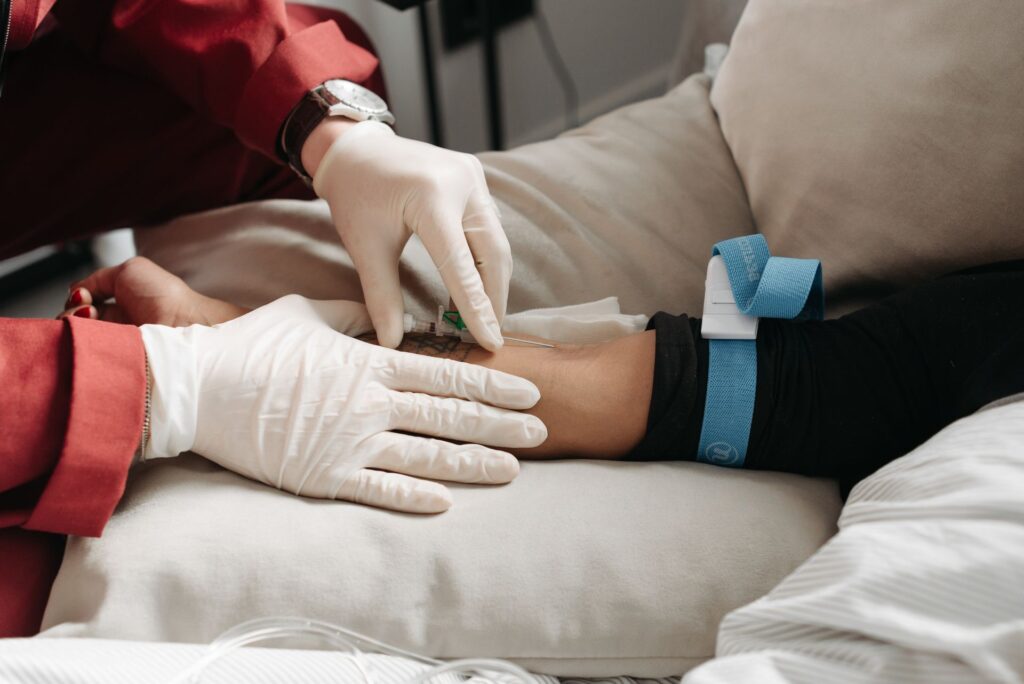
*Cover image by Artur Kraft (Unsplash)

Beyond carbon: the parts of sustainable kidney care that are still missing

An open library of kidney care life cycle data, free for anyone to reuse

Modality matters less than you think. What happens to the plastic matters more.
