
Home > News and Events >
News
KitNewCare Project Coordinator Discusses Life Cycle Assessments at Nordic Sustainable Healthcare Conference
Brett Duane, KitNewCare coordinator, discusses the importance of Life Cycle Assessments (LCAs) in evaluating and reducing the environmental impact of healthcare during the 6th Nordic Conference on Sustainable Healthcare (October 2024, Malmö, Sweden).
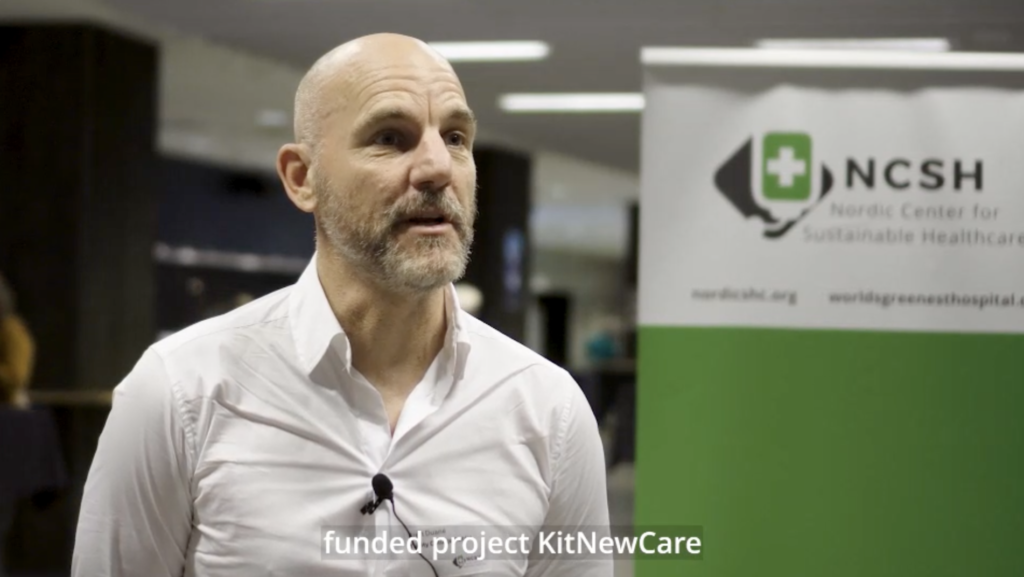
We are pleased to share that Brett Duane, coordinator of the KitNewCare project, was interviewed during the 6th Nordic Conference on Sustainable Healthcare, which took place on 15 October 2024 in Malmö, Sweden.
In his interview, Brett Duane emphasised the role of Life Cycle Assessments (LCAs) in promoting sustainability within healthcare. He discussed how LCAs can effectively assess the environmental impact of healthcare practices, including kidney care, and highlighted their significance in guiding the healthcare sector towards a greener future.
Watch the interview with here:
November 22, 2024


News
One death every 20 seconds: chronic kidney disease emerges as one of the world’s fastest-growing health threats
Every 20 seconds, somewhere in the world, a person dies from chronic kidney disease. Most of them never saw it coming. The condition progresses quietly, often without symptoms, until the damage is already severe. Now, new research involving scientists from across Europe warns that this silent disease is already affecting hundreds of millions of people, and could soon become one of the leading causes of death in Europe.

News
World Kidney Day 2026: Turning Sustainability into Action
Sustainability in healthcare is no longer a distant goal, it is an urgent responsibility. As World Kidney Day 2026 approaches, KitNewCare partners across Europe are launching a series of webinars that explore how kidney care can evolve to meet the environmental, social and economic challenges of our time.

News
Call for applications: Become a KitNewCare associate pilot site
As healthcare systems across Europe seek to reduce their environmental footprint without compromising patient care, the KitNewCare project is inviting kidney care centres to join its next phase of pilot activities as Associate Pilot Sites.
