Home   >   Archives for cesar crisosto
Scientific publications

Same treatment, very different footprint: what four European centres reveal about peritoneal dialysis

Peritoneal dialysis is often assumed to be the greener form of dialysis. It is done at home, it needs no water treatment plant and it spares patients three journeys a week to a clinic. A group of KitNewCare studies now shows that this reassurance is only half the story, and that where a patient is treated can matter almost as much as which therapy they receive.

The most comprehensive of the studies compared a full year of peritoneal dialysis per patient across four of the project’s clinical sites: Modena, Utrecht, Warsaw and Madrid. Using a cradle-to-grave life cycle assessment built to ISO 14040/14044 with OpenLCA, the ecoinvent v3.10 database and the EF 3.1 impact method, the team found a near two-fold spread in carbon footprint between centres, 3,381 kg CO2-equivalent per patient-year in Warsaw and 3,320 in Utrecht, against 3,101 in Modena and 1,736 in Madrid. Energy and water diverged too, from roughly 28,900 to 54,700 MJ of non-renewable energy and from 854 to 6,631 cubic metres of water-scarcity-weighted use.

What drives the gap is not the therapy itself but the way it is organised around the patient. Procurement of dialysate and single-use consumables was the largest single contributor at every centre, ranging from about 1,247 kg CO2-equivalent per patient-year in Madrid to 2,041 in Utrecht. Even centres prescribing identical dialysate volumes differed by up to 1,000 kg CO2-equivalent per patient-year. Utrecht’s high water figure traced back to a single habit: roughly 5,700 units of cotton gauze per patient each year, against around 1,000 elsewhere. Warsaw’s footprint was inflated by classifying non-hazardous disposables as hazardous waste; the authors estimate better segregation could save in the order of 550 kg CO2-equivalent per patient-year.

The clearest clinical lever was dose. Incremental peritoneal dialysis cut emissions by up to half, and the single lowest modality result across the whole study was incremental PD in Madrid at 494 kg CO2-equivalent per patient-year. A companion single-centre study mapping the entire Modena pathway, from education and catheter placement through to monthly review, reached the same conclusion from a different direction, reporting 3,267 kg CO2-equivalent per patient-year for automated PD and 2,975 for continuous ambulatory PD, falling to 1,642 and 1,517 respectively for incremental prescriptions. Within the treatment itself, plastics accounted for roughly 41% of emissions.

A third study went looking for the specific items responsible. Assessing a year of automated PD procurement in Modena, it found that the two 5-litre dialysate bags used daily carried 1,515 kg CO2-equivalent per patient-year on their own, more than half of all procurement emissions, followed by the 2-litre bag at 457 kg, the automated drainage system at 286 kg and the automated PD set at 187 kg. The top three items together exceeded three-quarters of the total. Corrugated cardboard packaging alone contributed more than 300 kg CO2-equivalent per patient-year. Notably, the larger bag was the more efficient one per litre of dialysate delivered, at 0.415 against 0.626 kg CO2-equivalent per litre.

The fourth study asks what would happen if these products were designed differently. Rebuilding the life cycle inventories of ten PD products with recycled plastics and packaging, renewable electricity in manufacturing, electric van freight and pyrolysis at end of life, the modelling found cradle-to-gate reductions above 40% for eight of the ten. The automated PD set fell 63% and the cycler 87%. Bio-based plastics were modelled and set aside, on grounds of marginal benefit and unresolved regulatory and supply barriers.

These are modelled redesigns, not validated products, and the clinical performance of the alternatives has not been tested. But read together the four studies point somewhere practical: prescribe incrementally where it is clinically appropriate, fix waste segregation, question the consumables that are opened out of habit, and put carbon into procurement conversations with manufacturers.

Related readings

*Photo by Pavel Danilyuk.

August 31, 2026
Home   >   Archives for cesar crisosto
Newsletter

KitNewCare launches its newsletter: “Four Hospitals, One Mission”

KitNewCare has published the first edition of its newsletter, a new home for the project's progress, from hospital-level sustainability wins to upcoming conferences and free training for the wider kidney care community.

KitNewCare has published the first edition of its newsletter, giving partners, clinicians and the wider sustainable healthcare community a single place to follow the project’s progress, from clinical optimisations to upcoming conferences and free training.

Titled “Four Hospitals, One Mission: Sustainable Kidney Care Takes Shape”, the first issue opens with a look at why KitNewCare exists: dialysis saves lives, but it is also one of the most resource-intensive treatments delivered by health systems, consuming large volumes of water and energy and generating significant waste. The newsletter sets out how the project is working to change that, by measuring the environmental footprint of kidney care, testing practical optimisations across real clinical settings, and building the tools, evidence and training needed to scale sustainable practice across Europe.

The first edition brings readers up to date on several fronts. Under Project News & Updates, it covers the expansion of KitNewCare’s clinical network through new Associate Pilot Sites across Europe, and the story of how four pilot hospitals (in Madrid, Utrecht, Modena and Warsaw) are cutting waste, saving energy and reducing costs without compromising patient care. Under Event Participation, it recaps the project’s presence at the ERA Congress 2026 in Glasgow and a plenary session at CleanMed Europe, where KitNewCare’s experience was shared directly with the wider healthcare sustainability community.

Looking ahead, the newsletter previews two upcoming Kidney Care SusNet webinars (27 August and 24 September 2026) and confirms KitNewCare’s participation at the 8th Nordic Conference on Sustainable Healthcare in Malmö on 1 October, where project coordinator Prof Brett Duane will speak alongside partners from the Danish Technological Institute and BD. It also flags a first look at a joint side event with sister Horizon Europe projects NetZeroAICT and CARING NATURE, with the full story to follow in the second edition.

Rounding out the issue, a Learning Courses section points readers to the free KitNewCare Sustainable Kidney Care Course, now available in four languages, and a Scientific Publications section invites the community to follow the project’s growing collection of outputs on Zenodo ahead of a fuller publications round-up next time.

Haven’t seen it yet? Subscribe to the KitNewCare newsletter to receive this and future editions directly in your inbox.

Read the online version of the newsletter here.

July 24, 2026
Home   >   Archives for cesar crisosto
Upcoming events

From the Bedside to the Membrane: KitNewCare Brings the Evidence for Sustainable Kidney Care to Glasgow

Five peer-reviewed abstracts accepted at the 63rd European Renal Association (ERA) Congress in Glasgow will put the KitNewCare consortium at the centre of Europe’s debate on how to make dialysis cleaner, safer and more affordable — without compromising patient care.

When nephrologists, engineers, patients and policymakers gather in Glasgow this June for the European Renal Association (ERA) 2026 Congress, KitNewCare will arrive with a heavy folder under its arm.

The project has had five abstracts accepted at the meeting and, in a clear sign of the project’s growing gravitational pull on the European renal community, two of its leading voices have also been invited to deliver named lectures in the official scientific programme. Together, the studies and talks map an entire value chain: from the patient’s living room to the hospital workflow, from the disposable cartridge to the nanoscale behaviour of the membranes that filter millions of litres of blood every year across Europe.

Taken individually, each contribution addresses a specific problem. Taken together, they add up to something rarer: a coherent, evidence-based blueprint for what sustainable nephrology could actually look like by the end of the decade.

Why Glasgow, and why now

Haemodialysis remains one of the most resource-intensive therapies delivered routinely by European health systems. A single four-hour session can consume between 300 and 500 litres of water and up to 25 kWh of electricity, and generates several kilograms of single-use plastic waste. Multiplied across the roughly 150 sessions that a patient receives every year, and across the hundreds of thousands of people on dialysis in Europe, the environmental and economic footprint is enormous.

That uncomfortable arithmetic is now squarely on the agenda of the nephrology community. The ERA Congress has, in recent years, devoted a growing share of its programme to sustainability, and is doing so again in Glasgow. KitNewCare arrives in that context as both a case study and a methodology: a structured attempt to prove, across four pilot hospitals and a network of technical partners, that dialysis can be decarbonised through the combined force of clinical quality improvement, circular-economy design, and next-generation membrane technology.

Two invited lectures set the tone on Saturday morning

This year’s programme opens its dedicated sustainability session on Saturday, 6 June, with two back-to-back invited lectures that together frame the debate KitNewCare has spent the last three years helping to shape.

At 09:00 BST, Karin Gerritsen (UMC Utrecht, Netherlands), nephrologist, scientific driving force behind much of the KitNewCare portfolio and senior author on every one of the consortium’s five accepted abstracts — will deliver a talk entitled “Advances in Green Dialysis.” Gerritsen is expected to pull together the threads that run through her team’s work: life-cycle thinking, circular medical-device design, low-pressure membrane technologies, and the emerging evidence on particulate exposure. For an audience used to seeing sustainability discussed in generic terms, it promises to be one of the more data-rich sessions of the congress.

Thirty minutes later, at 09:30 BST, Frances Mortimer (Centre for Sustainable Healthcare, United Kingdom) will take the stage with “Exploring Patients’ Perspectives.” Mortimer, medical director of one of the European pioneers of sustainable clinical practice, has long argued that decarbonising care cannot be designed solely by engineers and clinicians: patients, whose lives revolve around the therapy, must be full partners in redesigning it. Her lecture is expected to make the case that sustainability and patient-centred care are not parallel agendas but the same agenda, and to offer practical guidance on how renal units can bring patient voice into sustainability decision-making.

The juxtaposition is deliberate and telling. In twenty minutes of hard science followed by twenty minutes of lived experience, the ERA 2026 organisers have effectively laid out the two axes along which sustainable nephrology will have to advance: technical rigour on one side, human-centred legitimacy on the other. KitNewCare’s five abstracts sit squarely inside that frame.

“Five abstracts, two invited lectures, one message: sustainability in kidney care is no longer aspirational — it is measurable, reproducible and ready for clinical adoption.”

1. Where treatment happens matters: the environmental case for home haemodialysis

Abstract 1674 · Fehintola et al. · Subtopic: Peritoneal dialysis & home therapies

The first of KitNewCare’s contributions tackles a question that has been quietly debated in nephrology for years: does home haemodialysis really lighten the environmental load, or does the cost of shipping consumables to a patient’s doorstep erase the benefit of not driving them to hospital three times a week?

A team led by Trinity College Dublin and University Medical Centre Utrecht (UMCU), working with Dianet, Radboud University Medical Center and Fundación Jiménez Díaz in Madrid, ran a full cradle-to-grave life cycle assessment (LCA) — in line with ISO 14040/44 — comparing in-centre haemodialysis (ICHD) against three home modalities: standard home haemodialysis (HHD), nocturnal HHD, and Physidia HHD.

The numbers, measured over one patient-year, are striking. Standard HHD produced the lowest annual carbon footprint at 1,580 kg CO₂-equivalent per patient, followed by nocturnal HHD (2,976 kg CO₂-eq) and conventional in-centre care (4,249 kg CO₂-eq). Physidia HHD, which uses a low-flow device often delivered with a higher consumable burden, came in highest at 4,896 kg CO₂-eq.

The dominant drivers differ by setting. In ICHD, patient travel alone accounts for 39% of the climate impact — a finding that will resonate with any centre still operating a fleet of patient transport minibuses. In home modalities, treatment intensity and consumables become the lever: the more frequent or more intense the therapy, the closer its footprint edges toward in-centre care.

The operational message for clinicians is nuanced rather than ideological. Home dialysis is not automatically greener, but when prescribed with an eye to intensity and logistics, it can roughly halve the annual carbon cost per patient. That makes the environmental dimension a legitimate — and quantifiable — input to the shared decision-making process at the point of prescription.

2. Small workflow tweaks, outsized returns

Abstract 3808 · Fehintola et al. · Greener dialysis in routine practice

If the home-versus-hospital study looks at the care pathway from 10,000 feet, the second KitNewCare abstract zooms down to the dialysis room itself. Led again by the Trinity–UMCU–Fundación Jiménez Díaz partnership, it asks a disarmingly simple question: what happens if a unit audits two of its most routine workflows and gently re-engineers them?

The team picked two deliberately unglamorous targets. The first was the disposable sterile vascular access kit — a standard tray used during puncture of the dialysis access — in situations where sterility is not, in fact, clinically required. The second was the end-of-session handling of bloodlines and dialysers, which in current practice are discarded full of fluid.

Intervention 1: swapping the sterile kit for non-sterile Kleenex™ protection sheets and Klinipress™ compresses in eligible cases. Intervention 2: an automated post-treatment drainage step that empties bloodlines and dialysers before they are sent to biohazard incineration.

The results of the comparative LCA, using the Environmental Footprint 3.1 method, are hard to ignore. Replacing the sterile kit cuts climate-change impact by 68.5% per session, freshwater ecotoxicity by 87%, and non-renewable energy use by 71%, with reductions of 57–87% across every midpoint category assessed. Automated drainage yields a further 9% cut in greenhouse-gas emissions, 8% in freshwater ecotoxicity, and 2.5% in energy use.

Neither change requires new equipment, new regulation, or new training budgets. That is precisely the point: the KitNewCare consortium is building a library of low-cost, operationally feasible changes that any nephrology unit in Europe could plausibly adopt this year.

3. Designing the single-use cartridge out of dialysis

Abstract 3175 · Smulders et al. · Introducing the reusable “Bicare” cartridge

The third contribution, presented by Josje Smulders and colleagues from UMCU and TU Delft, targets a less visible but environmentally punishing component of modern dialysis: the single-use bicarbonate cartridge. Previous KitNewCare work had already flagged the cartridge as the second-largest contributor to the environmental impact of dialysis consumables, behind only the dialyser itself.

Two parallel investigations set the scene. A fast-track life cycle assessment revealed that sodium bicarbonate powder production alone accounts for 56% of the cartridge’s total CO₂-equivalent emissions. A week-long waste audit at UMC Utrecht then showed that, on average, 40% of the bicarbonate powder in each cartridge is discarded unused at the end of a session.

That evidence fed directly into the redesign. Using a research-through-design method structured around the Triple Diamond approach — and with nurses, sterilisation staff and sustainability experts in the room throughout — the team developed a reusable bicarbonate cartridge called Bicare, together with a circular reuse system built around three or four dosage options, clear labelling and combined cleaning and refilling.

The comparative LCA delivers one of the most quotable findings of the whole KitNewCare portfolio. Although manufacturing a Bicare cartridge initially costs more in CO₂-equivalent terms than a disposable one (3.4 kg vs 1.6 kg), the reusable design overtakes the disposable at just 3.25 reuse cycles. By 10 cycles, the environmental impact per treatment is down by 33%; by 50 or more cycles, by 45%. Critically, stakeholder sessions confirmed that implementation is feasible within existing hospital workflows, without additional risk to patient safety or nurse workload.

In a decade in which the European healthcare sector is being pushed, hard, toward the circular economy, Bicare is a rare example of a circular medical device that also happens to survive a cold-eyed clinical safety review.

4. A quieter kind of dialysate: biomimetic forward osmosis

Abstract 1084 · Tsai et al. · Forward osmosis for sustainable dialysate generation

The fourth KitNewCare abstract reaches past clinical workflow and into the physical chemistry of dialysis itself. Jan Tsai and colleagues — working across UMC Utrecht, TU Delft, the University of Twente and the Danish aquaporin specialist Aquaporin A/S — are asking whether the reverse-osmosis (RO) plant that quietly consumes huge volumes of water and electricity in every dialysis centre is still the right technology for the job.

To put the problem in scale, the authors note that at UMC Utrecht — a relatively small unit with 18 dialysis beds — the annual water and electricity consumption tied to dialysate preparation is equivalent to that of roughly 50 and 80 average Dutch households, respectively. Much of that burden comes from the high pressures at which RO systems operate, and from the reject water they inevitably produce.

Their alternative is a biomimetic hollow-fibre forward osmosis (FO) module — a low-pressure membrane that mimics the natural aquaporin proteins that transport water across biological cell walls. Combining bench experiments with a numerical solution-diffusion model (achieving an excellent R² of 0.997), the team showed that two commercially available FO modules, connected in series, can produce roughly 40 L of correctly diluted dialysate per hour — enough to sustain a conventional haemodialysis treatment at 500 mL/min.

The headline figures are almost too good to restate casually. The FO system operates below 0.5 bar, approximately 30 times lower than a conventional RO system; the estimated electricity demand is around 3.5% of what RO requires; and projected water recovery rises to about 90% under Dutch tap-water conditions, compared to the 50–80% typical of RO.

If the technology scales — and that remains the open question FO researchers will debate in Glasgow — it could reshape the business case for decentralised, mobile or low-resource dialysis, including in settings where building a conventional RO plant has so far been the limiting factor.

5. An uncomfortable new signal: microplastics in the blood circuit

Abstract 3348 · Vernooij et al. · Quantifying micro- and nanoplastic release during dialysis

The fifth KitNewCare contribution is, in some ways, the most unsettling — and arguably the most important for the wider nephrology community. A team led by Robin Vernooij, with colleagues from UMC Utrecht and Utrecht University’s Institute of Sustainable and Circular Chemistry, set out to measure something the field has long suspected but rarely quantified: the release of microplastics and nanoplastics (MNPs) from standard dialysis equipment during treatment.

Using a clinical-grade Nikkiso dialysis setup and deionised water, the researchers ran four tightly controlled scenarios — a water-only control, water through the lineset only, water through a lineset plus dialyser via the blood ports, and water routed via the blood inlet and dialysate outlet to apply dead-end filtration through the hollow fibres. Atomic force microscopy (AFM) then imaged the dried residues at nanometre resolution.

The controls and lineset alone produced a baseline particle load of roughly 8 particles per 15 scans. Once the dialyser entered the circuit, that number jumped to 27 per 15 scans, with particles concentrated in the 30–100 nm range — well below the detection threshold of most routine analytical methods — and with visible polymeric fibres appearing in the dialyser effluent that were absent from controls. In the dead-end filtration scenario, particle counts dropped again, consistent with the fibres acting as an unintended, imperfect nanofilter.

The clinical implication is hard to wave away. Standard thrice-weekly patients are exposed to the extracorporeal circuit roughly 156 times a year. Even if the per-session MNP release is small, cumulative systemic exposure over years of renal replacement therapy could be substantial — and its toxicological consequences for cardiovascular health and residual kidney function are, for now, essentially unknown. The KitNewCare authors are explicit that the next step is a full chemical fingerprint of the particles using AFM coupled with infrared spectroscopy, plus mass-spectrometry assessment of leachates.

In journalistic terms, this is a signal the field cannot ignore: an environmental-health story that starts in the dialysis circuit and ends in the patient’s bloodstream.

“KitNewCare is doing at a European scale what no single hospital could do alone: connecting clinical evidence, life-cycle analysis, industrial design and materials science into one coherent sustainability agenda.”

A consortium speaking in one voice

Viewed side by side, the five abstracts reveal the deliberate architecture of the KitNewCare project. One study asks where care should be delivered; another asks how it should be delivered inside the unit; a third redesigns the consumable it depends on; a fourth re-engineers the water that flows through it; a fifth interrogates whether the plastic infrastructure itself may be a hidden toxin.

The common thread is method. Every contribution leans on rigorous, transparent evaluation: ISO-compliant life cycle assessments, research-through-design methodologies with stakeholder co-creation, quantitative engineering models, and clinical-grade experimental setups. That methodological discipline is what transforms otherwise scattered innovations into a replicable European model.

The geography is equally telling. The five abstracts are co-authored by researchers from UMC Utrecht, TU Delft, the University of Twente, Trinity College Dublin, Radboud University Medical Center, Dianet, Fundación Jiménez Díaz in Madrid, Utrecht University’s Institute for Risk Assessment Sciences, and the Danish membrane company Aquaporin A/S. That is precisely the kind of cross-border, cross-disciplinary collaboration that Europe’s research programmes were designed to foster — and it shows.

What to watch for in Glasgow

For the ERA 2026 audience, the interesting question is not whether these individual findings will make it into the final programme — they already have — but how quickly nephrology departments across the continent will act on them.

Three signals are worth tracking. First, whether clinical guidelines start to treat environmental impact as a legitimate variable in modality choice, as the home-versus-hospital LCA would imply. Second, whether reusable cartridges and non-sterile workflow substitutions move from pilot wards to procurement contracts — the step at which sustainability stops being a bolt-on project and becomes a line item. Third, whether the microplastics findings catalyse a broader, multi-centre safety study: if dialyser-derived nanoparticles really do reach the patient, the regulatory and design implications for medical devices will extend far beyond nephrology.

KitNewCare’s argument, written across all five abstracts, is that these questions can no longer be parked as someone else’s problem. The data are here. The designs exist. The operational models have been tested at pilot scale. The final step — adoption — belongs to the community gathering in Glasgow.

“In four hospitals, a handful of labs and one European consortium, the future of sustainable dialysis is no longer a hypothesis. It is a stack of peer-reviewed abstracts, on its way to Glasgow.”

*Cover image by Artur Kraft (Unsplash)

June 2, 2026
Home   >   Archives for cesar crisosto
News

Sustainable Kidney Care Expands Across Europe

Kidney centres across Europe are joining forces with KitNewCare as new Associate Pilot Sites, helping to test and validate innovative solutions that aim to reduce the environmental footprint of kidney care while maintaining high-quality patient outcomes. Their participation marks an important step towards scaling sustainable kidney healthcare practices across diverse clinical settings and healthcare systems.

The KitNewCare project has reached an exciting milestone with the onboarding of Associate Pilot Sites.

KitNewCare is an EU co-funded project dedicated to making kidney healthcare more sustainable and embracing climate neutrality. The project brings together a large consortium with a shared goal of reducing the environmental footprint of kidney care while maintaining high clinical standards through the development of sustainable solutions.

Associate Pilot Sites are kidney centres across Europe joining the project’s existing clinical partners located in Italy, Poland, Spain and the Netherlands by testing sustainability-focused solutions. Associate Pilot Sites will play a key role in strengthening KitNewCare’s impact by participating in the piloting of the following areas led by the Centre for Sustainable Healthcare:

Organisational and workflow optimisations

  • The organisational and workflow optimisations are coordinated sets of changes, designed to reduce the environmental and financial impacts of healthcare while maintaining or improving health outcomes and social impacts. Associate pilot sites will be building on successful optimisations implemented in the original KitNewCare sites, by replicating these changes within their own centres.

Benchmarking tool

  • The Benchmarking tool is designed to measure and monitor health outcomes, social impacts, environmental impacts, and costs of kidney centres and their different treatment options. By identifying performance hotspots and tracking improvements over time, the tool aims to help centres improve their outcomes and shift towards more sustainable practices. Associate Pilot Sites will contribute to the second phase of piloting the tool, helping to improve its usefulness, feasibility and accuracy in capturing outcomes in kidney centres.
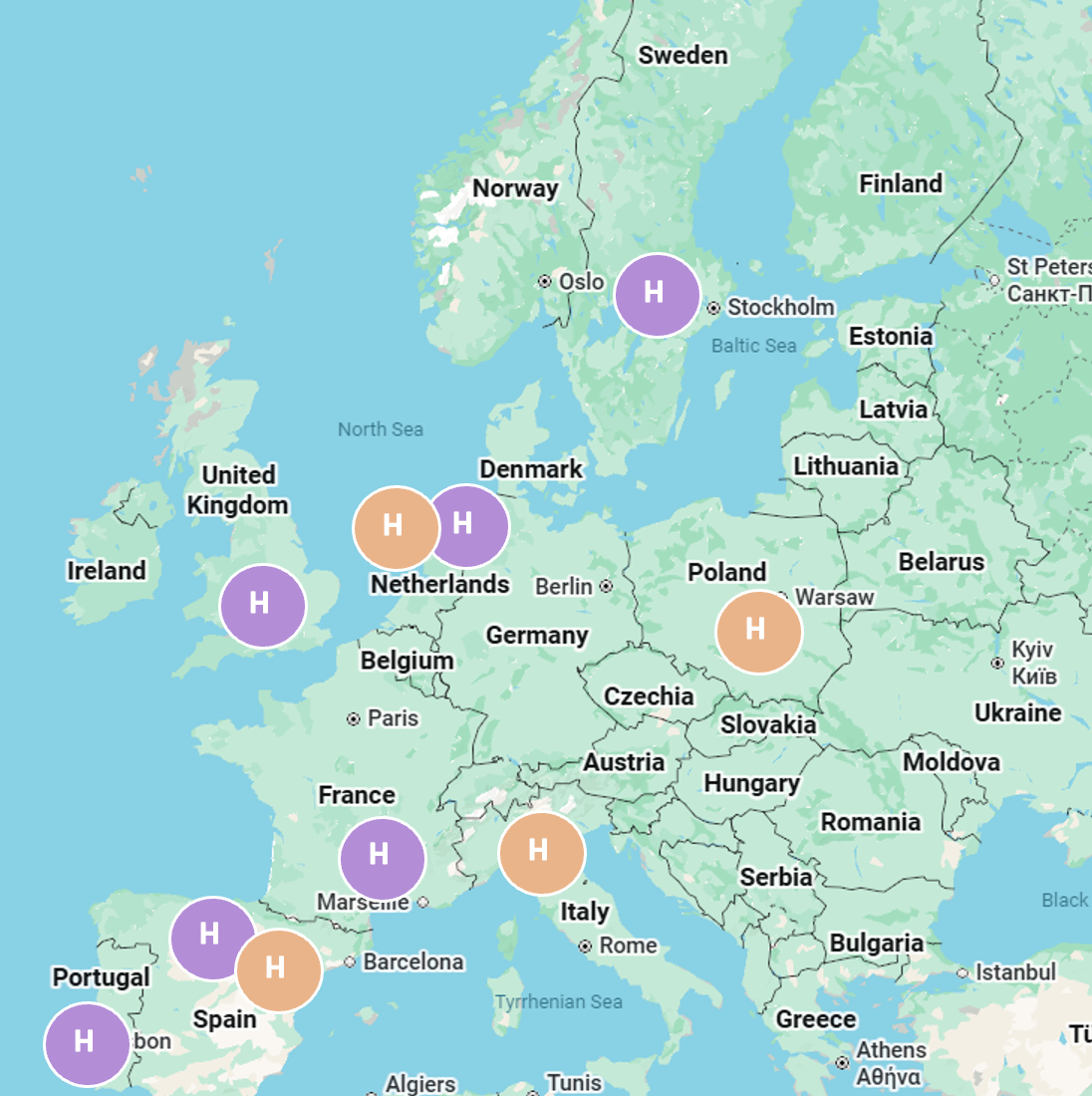
A map of Europe with Hs that represent the associated pilot sites of the KitNewCare project

Associated pilot sites of the KitNewCare project

The involvement of Associate Pilot Sites will ensure that solutions developed in the project are scalable and adaptable across kidney centres in Europe. We are delighted to welcome KitNewCare’s Associate Pilot Sites across the UK, Portugal, Spain, the Netherlands, France and Sweden and look forward to working closely together.

*Cover image by Antonio Janeski (Unsplash)

June 2, 2026
Home   >   Archives for cesar crisosto
Project Updates

Kidney disease is one of healthcare’s most polluting conditions. Four hospitals are proving it doesn’t have to be

Across four European hospitals, clinical teams are transforming the way kidney dialysis is delivered cutting waste, saving energy, and reducing costs, all without compromising a single moment of patient care. This is the story of KitNewCare and its optimisations.

Every week, hundreds of thousands of people across Europe arrive at dialysis units for life-sustaining treatment. Each session — typically three times a week, lasting up to five hours — demands vast quantities of water, energy, and single-use materials. Kidney disease is one of healthcare’s most resource-intensive conditions to manage. Yet for decades, the clinical imperative to keep patients alive and well has left little room to ask: could we do this more sustainably?

KitNewCare, a European Union–funded project, is asking exactly that question — and four pioneering clinical pilot sites are already delivering answers. From Madrid to Utrecht, from Modena to Warsaw, kidney care teams are not waiting for large-scale systemic change. Instead, armed with evidence, structured methodology, and a willingness to challenge habits formed over years of routine practice, they are redesigning care from the inside out.

A Structured Approach to Meaningful Change

What makes KitNewCare distinctive is not just what the clinical teams are changing, but how. Each optimisation follows the Plan-Do-Study-Act (PDSA) cycle, a quality improvement methodology trusted in healthcare contexts worldwide. Rather than mandating changes from above, the PDSA approach empowers local teams to identify the right change for their context, test it in practice, study its effects carefully, and refine it before embedding it into routine care.

The process begins with three deceptively simple questions: What are we trying to accomplish? How will we know that a change is an improvement? And what changes can we make that will actually result in improvement? These questions draw on the SusQI (Sustainable Quality Improvement) framework, which integrates environmental sustainability directly into the logic of healthcare quality improvement — a marriage that is still surprisingly rare in clinical settings.

“Once a change has been proven effective at one site, it becomes a tested, replicable model — ready to travel across the partnership and ultimately to kidney care units far beyond the project.”

The result is a living library of change projects: rigorously planned, carefully monitored, and refined through real-world learning. Once a change has been proven effective at one site, it becomes a tested, replicable model — ready to travel across the partnership and, ultimately, to kidney care units far beyond the project.

From Blood Tests to Bicarbonate: The Breadth of the Optimisations

The range of changes being implemented is striking in its breadth. Some address the everyday rituals of clinical practice; others target the heavy infrastructure that keeps dialysis machines running. Together, they point to a systemic reimagining of what sustainable kidney care can look like.

Eliminating Redundant Tests and Supplies

At Fundación Jiménez Díaz (FJD) in Madrid, clinicians identified a deceptively simple opportunity: patients wearing continuous glucose monitoring (CGM) devices — which measure blood sugar automatically through a small sensor under the skin — were still being tested with single-use glucose test strips at the start of every dialysis session. The rationale for the strips had long since been overtaken by technology. Removing this routine for CGM users reduces consumable waste, cuts supply costs, and eliminates a small but entirely unnecessary procedural burden — all while maintaining accurate, real-time glucose monitoring.

A related change at FJD targets the broader landscape of blood tests. Some analytical tests are carried out routinely — by force of habit as much as clinical necessity. By reviewing testing profiles and reducing the frequency of non-essential tests, the team expects to cut material waste, lower costs, and free up staff time for work that genuinely matters to patient outcomes.

Rethinking Energy Consumption

At FJD, an audit of the Nephrology and Dialysis departments found that the vast majority of computers were simply left on overnight and through weekends — not out of necessity, but out of inertia. In collaboration with the hospital’s IT department, an automated shutdown has been introduced for 90% of department computers at the end of every working day. The change is simple, costs virtually nothing to implement, and directly reduces electricity consumption.

A parallel change addresses the warming plates used in peritoneal dialysis. These devices heat the fluid bags that patients use for treatment, improving comfort. But in several units, they were left switched on continuously — even during periods when no treatment was being prepared. Switching them on only when needed introduces no clinical risk and meaningfully reduces unnecessary power draw.

Transforming Waste Management

Perhaps the most transformative cluster of optimisations concerns the handling and disposal of medical waste — an area where the gap between current practice and best practice is often significant, and where the environmental and financial stakes are high.

At the University Medical Centre Utrecht (UMCU) in the Netherlands, used blood circuits — including bloodlines, artificial kidneys, and effluent bags — are being drained before disposal. This single step reduces the total weight of waste sent to central incineration or decontamination, lowering both transport emissions and disposal costs. A companion initiative goes further: plastic bags containing biological fluids are being emptied and decontaminated, transforming them from hazardous waste into recyclable material. The environmental logic is compelling: less incineration means less energy use and lower emissions.

UMCU is also pioneering the introduction of recycling bins at each dialysis station, supported by staff training, to enable proper waste separation at source. The goal is to prevent recyclable materials from being discarded as hazardous waste — a common and costly mis-classification in busy clinical environments.

In Modena, the University of Modena and Reggio Emilia (UNIMORE) team is tackling the same problem through a complementary lens, redesigning processes and providing practical infrastructure and staff guidance to ensure general and recyclable materials are correctly separated. They are also implementing a sustainable disposal process for bicarbonate cartridges — either rinsing them for recycling or using dedicated collection bins — diverting significant volumes of material from incineration or landfill.

At the Medical University of Warsaw (WUM) in Poland, a programme of waste segregation improvement — combining better infrastructure with staff training — mirrors these efforts within the Polish healthcare context.

Optimising the Machines at the Heart of Dialysis

Modern dialysis machines are sophisticated devices, with built-in features designed to improve both efficiency and sustainability. Yet in busy clinical environments, these features are often inconsistently used — or not used at all.

At UMCU, the AutoFlow function on dialysis machines is being systematically activated. AutoFlow dynamically adjusts the rate of dialysate flow to match actual clinical need, reducing water, acid, and bicarbonate concentrate consumption without any compromise to treatment quality. Similarly, standby mode and online reinfusion features are being embedded into standard operating practice.

UNIMORE is taking a particularly rigorous approach. An audit of machine use revealed significant variation across nurses, shifts, and rooms in how built-in sustainability features were being applied. A unified protocol is now being implemented to standardise practice across the unit — ensuring that the machines’ environmental potential is consistently realised, regardless of who is operating them or when.

Both UMCU and WUM are also incorporating sustainability criteria into the procurement of new dialysis machines — a forward-looking change that will shape environmental performance for the decade ahead. Energy efficiency, water use, and broader environmental impact are now formal considerations in purchasing decisions, rather than afterthoughts.

Smarter Systems and Leaner Processes

Alongside clinical and operational changes, the pilot sites are investing in smarter infrastructure. UMCU is installing GPS (GreenTec Performance System) software for real-time monitoring of Reverse Osmosis processes, as well as heat and water consumption across its dialysis installations. The software transforms previously invisible resource flows into actionable data — enabling early detection of inefficiencies and providing the evidence base for further sustainability improvements.

UMCU is also replacing sterile connection sets used for venous access puncture during haemodialysis with safe, clinically validated non-sterile alternatives. The change reduces both material waste and storage space requirements, without any impact on patient safety — a reminder that clinical convention and clinical necessity are not always the same thing.

At WUM, a redesign of the online medical ordering and pharmacy system is reducing drug returns: a form of waste that carries both financial and environmental costs, from unnecessary manufacturing and transport through to the energy-intensive disposal of unused medications. In parallel, the introduction of electronic signatures is eliminating paper-based documentation — a change whose benefits compound across thousands of dialysis sessions every year.

The Sum Is Greater Than the Parts

Viewed individually, each of these optimisations might seem modest. A computer switched off at the end of the day. A blood test avoided. A waste bag drained before disposal. But the KitNewCare model is built on a different arithmetic. Multiplied across hundreds of dialysis sessions per week, per site, per year — and replicated across the growing community of hospitals that will adopt these changes — the cumulative impact is substantial.

More importantly, every optimisation validated in practice becomes a template. The PDSA methodology ensures that what works in Utrecht can be understood, adapted, and implemented in Warsaw or Madrid — with the evidence and the learning already in hand. This is not just change management; it is knowledge transfer at scale.

The KitNewCare project is demonstrating something that can sometimes be lost in the complexity of healthcare sustainability debates: that the gap between current practice and best practice is often surprisingly small, and that the people best placed to close it are the clinicians and care teams who live and breathe these environments every day.

“The gap between current practice and best practice is often surprisingly small — and the people best placed to close it are the clinicians who live and breathe these environments every day.”

Europe’s kidney care community is watching. And in four hospitals, the future of sustainable dialysis is already being written — one small, evidence-based change at a time.

April 14, 2026
Home   >   Archives for cesar crisosto
News

One death every 20 seconds: chronic kidney disease emerges as one of the world’s fastest-growing health threats

Every 20 seconds, somewhere in the world, a person dies from chronic kidney disease. Most of them never saw it coming. The condition progresses quietly, often without symptoms, until the damage is already severe. Now, new research involving scientists from across Europe warns that this silent disease is already affecting hundreds of millions of people, and could soon become one of the leading causes of death in Europe.

Chronic kidney disease rarely makes headlines. It progresses quietly, often without symptoms, slowly damaging one of the body’s most essential organs. Yet a new international study warns that this largely overlooked condition is already affecting hundreds of millions of people worldwide, and its impact is only growing.

According to the latest research, involving Professor Alberto Ortiz (Fundación Jiménez Díaz-Universidad Autónoma Madrid) , a partner in the European KitNewCare project, chronic kidney disease (CKD) now affects around 850 million people globally and causes about 1.5 million deaths every year: the equivalent of one death every 20 seconds.

The figures come from updated analyses linked to the Global Burden of Disease Study, the largest effort to map health trends worldwide. What emerges from the data is a troubling picture: while progress in prevention and treatment has reduced mortality from many major diseases, kidney disease is moving in the opposite direction.

By 2050, researchers warn, chronic kidney disease could become the third leading cause of death in Western Europe, overtaking many conditions that have traditionally dominated public health priorities.

The scale of the problem is difficult to grasp at first glance. Across Europe alone, an estimated 93 million adults live with chronic kidney disease, and around 210,000 people die from it every year: one death every two and a half minutes.

Yet despite these numbers, CKD remains one of the most under-recognised global health threats. Unlike heart disease or cancer, kidney disease often advances unnoticed. Many patients do not realise anything is wrong until their kidneys have already suffered significant damage.

In clinical terms, chronic kidney disease is diagnosed when the kidneys’ ability to filter waste from the blood declines or when early markers of kidney damage persist for more than three months. But because the condition progresses slowly and silently, large numbers of people remain undiagnosed, even though early detection could dramatically change the course of the disease.

This lack of awareness has real consequences. When kidney disease advances to its final stages, patients may require kidney replacement therapy (dialysis or transplantation) simply to stay alive.

Globally, more than 4.6 million people now rely on dialysis or kidney transplants, a figure that has nearly tripled since 1990.

These treatments are life-saving, but they do not fully replace the complex functions of healthy kidneys. Patients undergoing dialysis can face dramatically shortened life expectancy, sometimes more than 40 years less than the general population, while even transplant recipients may live around two decades less than people without kidney disease.

Behind these stark statistics lies a paradox. In recent decades, major advances in public health have significantly reduced deaths from conditions such as stroke and heart disease, thanks to strong prevention strategies, early screening programmes and targeted treatments. Kidney disease, however, has not benefited from the same level of attention.

The new analysis suggests that this imbalance may soon reshape the global health landscape. While deaths from cardiovascular disease are projected to decline substantially in the coming decades, the burden of chronic kidney disease is expected to continue rising.

For researchers, the message is clear: the fight against kidney disease must begin much earlier.

Simple and inexpensive tests (such as measuring albumin in urine, an early signal of kidney damage) could allow doctors to detect the disease years before symptoms appear. Early interventions can delay kidney failure by decades, preventing suffering for patients and reducing the enormous costs associated with dialysis and transplantation.

The study also highlights inequalities in access to treatment across Europe. In some countries, patients are far more likely to receive kidney transplants than in others, revealing important differences in healthcare systems and treatment availability.

Ultimately, the findings point to a broader challenge for health systems worldwide. As populations age and chronic diseases become more common, kidney health is emerging as a critical piece of the puzzle, one that cannot remain in the shadows.

For the KitNewCare project, which focuses on building more sustainable and patient-centred kidney care pathways, the research reinforces the urgency of improving prevention, diagnosis and treatment across Europe.

Because behind the statistics lies a simple truth: while chronic kidney disease may progress silently, its impact on patients, families and healthcare systems is anything but quiet.

And unless stronger action is taken, the world may soon discover that one of its most dangerous epidemics has been hiding in plain sight.

Read the paper here

*Cover photo by CDC on Unsplash

March 13, 2026
Home   >   Archives for cesar crisosto
News

World Kidney Day 2026: Turning Sustainability into Action

Sustainability in healthcare is no longer a distant goal, it is an urgent responsibility. As World Kidney Day 2026 approaches, KitNewCare partners across Europe are launching a series of webinars that explore how kidney care can evolve to meet the environmental, social and economic challenges of our time.

World Kidney Day has always been a moment to reflect on prevention, care and equity.

In 2026, for the KitNewCare project, it also becomes a moment of responsibility.

Kidney care is life-saving, but it is also resource-intensive. Dialysis alone consumes vast amounts of water, energy and materials. The question is no longer whether healthcare must respond to climate change. The question is how fast we can transform it, without compromising quality of care.

To mark World Kidney Day 2026 (12 March), KitNewCare partners across Europe are hosting a dedicated series of webinars designed to explore exactly that: how to make kidney care environmentally sustainable, economically responsible and socially fair, in practice (not just in principle).

Over one week, we move from vision to implementation, from innovation to patient voice, from technology to education.

Programme

🗓 12 March 2026 – 10:00 CET

“Sustainable Kidney Care: From Vision to Practice”

🔗 Registration

Sustainability in healthcare is often discussed at a strategic level. But what does it truly take to embed it in everyday clinical settings?

This opening session examines the contextual factors that determine whether sustainability becomes part of routine practice or remains an aspiration. It explores leadership, governance, culture and system-level enablers — the conditions that allow sustainable kidney care to move from concept to operational reality.

Speaker:

  • Daniel Eriksson, CEO, Nordic Center for Sustainable Healthcare

🗓 17 March 2026 – 11:00 CET

“Optimising Kidney Care Pathways: From Insight to Implementation”

🔗 Registration

How do kidney centres make sustainable change happen?

This webinar will explore the journey of planning and implementing sustainable change, with two of the KitNewCare clinical partner sites sharing their real-world experiences of optimising kidney care pathways. From mapping current practice and engaging frontline teams, to embedding changes into everyday care, the session highlights practical lessons, enablers, and transferable insights for any kidney service.

Speaker:

  • Dr Zuzanna Jakubowska, Warszawski Uniwersytet Medyczny (WUM)
  • Giuseppe Di Chiaro, Ph.D Researcher, Università degli Studi di Modena e Reggio Emilia (UNIMORE)
  • Harriet Attwell-Rogers, KitNewCare Project Manager – Organisational and Workflow Optimisations, Centre for Sustainable Healthcare

🗓 18 March 2026 – 10:00 CET

“Green Dialysis Technologies: Innovations and Pathways Forward”

🔗 Registration

Dialysis is both indispensable and environmentally demanding. Can innovation reshape this reality?

This webinar explores technological solutions aimed at reducing water consumption, waste production and carbon footprint in dialysis treatment. It will examine how emerging technologies — when paired with systemic thinking — can significantly lower environmental impact.

Speakers:

  • Karin Gerritsen, Associate professor (UMC Utrecht)
  • Tibo Verburg, MSc

🗓 19 March 2026 – 16:00 CET

“Sustainable Kidney Care: Listening to Patients in Times of Climate Change”

🔗 Registration

Sustainability cannot exist without listening.

Climate change disproportionately affects vulnerable populations, including people living with chronic kidney disease. This session shifts the focus toward patient experience, exploring how environmental sustainability intersects with quality of care, equity and access.

Speaker:

  • Paulo Zoio, Policy Officer, Portuguese Directorate General for Energy and Geology
  • Rajmund Michalski, Professor, Institute of Environmental Engineering of the Polish Academy of Sciences in Zabrze

23 March 2026 – 16:00 CET

“Teach Yourself Sustainable Kidney Care”

🔗 Registration

Knowledge is the foundation of change.

This closing session introduces the updated Sustainable Kidney Care learning modules, developed to build capacity across Europe. These educational resources empower healthcare professionals to identify environmental hotspots, apply sustainability principles and actively contribute to climate-neutral healthcare systems.

Speakers:

  • Furat Al-Murani (Centre for Sustainable Healthcare)
  • Stefi Barna (Centre for Sustainable Healthcare)

A Broader Transformation

Through this World Kidney Day series, KitNewCare demonstrates that sustainability in kidney care is not a separate agenda, it is inseparable from quality, efficiency and equity.

The programme reflects the project’s integrated approach:

  • Identifying environmental, social and economic hotspots
  • Testing and validating technological and organisational innovations
  • Developing benchmarking tools
  • Building a sustainability piloting network
  • Strengthening capacity across Europe

World Kidney Day 2026 becomes more than a campaign. It becomes a collective step towards reshaping how kidney care is delivered in a changing climate.

We invite healthcare professionals, administrators, policymakers, industry representatives, researchers and patient advocates to take part in this conversation, and in this transformation.

Because sustainable kidney care is no longer optional. It is the future.

March 2, 2026
Home   >   Archives for cesar crisosto
News

Call for applications: Become a KitNewCare associate pilot site

As healthcare systems across Europe seek to reduce their environmental footprint without compromising patient care, the KitNewCare project is inviting kidney care centres to join its next phase of pilot activities as Associate Pilot Sites.

The KitNewCare project has launched a Call for Applications to recruit new Associate Pilot Sites, inviting kidney care centres across Europe to take part in the next phase of its work towards environmentally sustainable and climate-neutral kidney care.

Funded under Horizon Europe, KitNewCare is developing and testing practical tools, methodologies and care pathway improvements to help healthcare providers reduce the environmental footprint of kidney care while maintaining high clinical standards and patient-centred outcomes. To strengthen the real-world relevance and scalability of these solutions, the project is now expanding its network of clinical collaborators  .

What does it mean to be an Associate Pilot Site?

Associate Pilot Sites will support secondary pilot activities by testing and applying selected KitNewCare tools and approaches within their own clinical settings. These activities focus on assessing current practices, identifying sustainability hotspots, and exploring optimisation opportunities along the kidney care pathway.

Participation offers centres the opportunity to:

  • Benchmark their kidney care practices across environmental, clinical, economic and social dimensions

  • Engage with practical tools designed to support more sustainable and resource-efficient care pathways

  • Contribute operational insights and feedback to help refine solutions for broader European adoption

  • Become part of a Europe-wide community of healthcare professionals committed to sustainable healthcare transformation

Who should apply?

The call is open to kidney care centres, dialysis units and hospitals across Europe that are interested in improving the sustainability of kidney care services. Prior expertise in environmental assessment or sustainability metrics is not required, as guidance and structured support will be provided through the project.

Centres are expected to demonstrate motivation, organisational commitment and the capacity to engage in pilot activities within their routine clinical practice.

Contributing to system-level change in kidney care

By involving additional clinical sites, KitNewCare aims to ensure that its solutions are robust, transferable and adaptable to diverse healthcare contexts. Associate Pilot Sites play a crucial role in validating approaches beyond the initial pilot settings, helping to bridge the gap between innovation, everyday practice and long-term system change.

Participation also contributes to the project’s wider objectives of informing future clinical guidance, policy discussions and sustainability strategies in kidney care at European level.

How to apply

Interested centres are invited to download the Call for Applications and submit their expression of interest according to the instructions provided.

⬇️ Download the Call for Applications


*Photo by Tima Miroshnichenko

January 22, 2026
Home   >   Archives for cesar crisosto
Upcoming events

Save the date: Innovation Challenge 2 to accelerate sustainable kidney care across Europe

KitNewCare will hold its second Innovation Challenge on 15 December, bringing together clinical partners, sustainability experts and industry stakeholders to reflect on the project’s first round of environmental audits and identify the priority innovations needed to advance greener kidney care across Europe.

The KitNewCare project is preparing to host its Innovation Challenge 2 (IC-2), a focused workshop bringing together clinical partners, sustainability experts and industry innovators to advance the project’s mission: improving the environmental performance of kidney care across Europe. Taking place on 15 December, this new edition builds on the strong foundations of Innovation Challenge 1, held last year in Malmö, and adds a new layer of insight—direct reflections from the first round of environmental audits carried out in real clinical settings.

The first Innovation Challenge, organised in October 2024, gathered more than 30 participants from across the project and the wider healthcare ecosystem. Led by the System Design Lab of Politecnico di Torino, that session combined presentations from clinical and industrial partners with hands-on system-thinking exercises. Participants analysed sustainability impacts within kidney care and explored emerging technologies ranging from nature-based water treatment to advanced resource-efficiency solutions.

One of the most valuable outcomes of IC-1 was a shared understanding of where innovation can meaningfully reduce the environmental footprint of renal care while improving patient and clinic workflows. IC-2 now takes this a step further by integrating practical evidence gathered in the field.

Over the past months, KitNewCare partners have conducted environmental audits across multiple European clinics. These audits assessed material flows, energy consumption, water use, waste streams and everyday operational practices in haemodialysis and peritoneal dialysis.

IC-2 will use this evidence base to address three key objectives:

  • Reflect on the sustainability audits and what they reveal about real-world kidney care processes.
  • Explore key learnings directly from clinics, identifying what is working, what is challenging, and what sustainability priorities emerge from their perspective.
  • Connect these insights to the project’s catalogue of innovations, ensuring that technical solutions under consideration respond to actual clinical needs.

The session will open with a welcome and project update from Prof. Brett Duane (TCD), followed by Daniel Eriksson (NCSH) presenting an overview of audit activities and the draft consolidated report.

Clinical partners from Utrecht, Warsaw and Madrid will then share their experiences, addressing the following subjects:

  • Data collection challenges in sustainability audits: practical difficulties, resource needs and insights gained from the audit process.
  • Systemic understanding of sustainability in kidney care: how audits help clinics see environmental impacts across the full care pathway.
  • Clinic-specific barriers to sustainability progress: organisational, technical or infrastructural constraints identified by partners.
  • Priority areas for technical improvement: the top sustainability hotspots and the technologies or processes that clinics consider most urgent to address.
  • Strategic next steps for integrating audit findings: how lessons learned should shape future work, innovation selection and the project’s overall sustainability roadmap.

The session will conclude with an open discussion and alignment on next steps towards integrating audit findings into the innovation roadmap.

Innovation Challenge 2 marks an important turning point for KitNewCare. By merging technology scouting, cross-sector engagement, and now clinic-level evidence, the project is progressively shaping a systemic understanding of how sustainability can be embedded in kidney care services—from equipment and water treatment to workflow design and patient-centred practices.

The outcomes of IC-2 will feed directly into the refinement of the project’s innovation catalogue and support the development of practical guidelines to help clinics transition toward more sustainable operations.

*Photo by Artem Podrez.

December 9, 2025
Home   >   Archives for cesar crisosto
Journalistic articles

Green kidneys: solving nephrology’s climate paradox

If the healthcare sector were a country, it would rank fifth among the world’s biggest emitters. Kidney disease, a silent threat affecting over 100 million Europeans, is treated through a highly polluting system now being tackled with a technology- and education-driven approach toward cleaner, smarter nephrology. Yet, the World Health Organization reminds us: “The greenest cure is prevention.”

By Marie Jamet

There is something rotten in the state of humans. The more we push the climate to change, the sicker we get, hence the more we need healthcare. The more healthcare we consume, the more it contributes to global emissions, and so the vicious circle is complete.

Because of this paradox, healthcare now accounts for around 4.5% of all global emissions, according to a study by The Shift project. The World Health Organization (WHO) report for the first Health summit at COP29 in Baku on November 2024 states that “If the healthcare sector were a country, it would rank as the fifth-largest emitter worldwide”.

The paradox is especially true of nephrology. A hundred million Europeans already suffer from chronic kidney disease. A meta study evaluated that for every 1°C rise in temperature during heatwaves, there was a 1% increase in renal complications.

Dialysis “has a really high carbon footprint compared with most other health interventions[…]”

Moreover, nephrology is a heavy contributor to healthcare’s carbon footprint. Issues come from different sources: the main treatment, haemodialysis, requires large amounts of treated water that is largely wasted. It generates significant waste, particularly plastic, and requires patients to visit hospitals three times weekly, mostly by car.

Around 7 tonnes of CO2eq are emitted per dialysis patient annually, compared to 0.4 tonnes per patient across all UK’s National Health services, a British study showed. The French-speaking society of nephrology, dialysis, and transplantation (SFNDT) estimates that a kidney patient consumes 60m³ of water annually in dialysis, adding to the 53m³ each inhabitant already consumes. Dialysis “has a really high carbon footprint compared with most other health interventions, because people are on dialysis for quite a while. It’s a huge amount of resources, a huge amount of energy, a huge amount of water,” explains Brett Duane, public health specialist and coordinator of KitNewCare, a European project aiming to reduce kidney care’s carbon footprint.

“Information is power”

In France, Maryvonne Hourmant, former head of the Nephrology and clinical immunology department at Nantes University Hospital and the then president of the SFNDT created a dedicated work group on sustainability around 2020. The green nephrology group published a guide focusing on dialysis in 2023. She was inspired by studies by British and Australian colleagues. Now retired, she keeps pushing the subject and has joined the Sustainable Nephrology Task Force within the European Renal Association (ERA).

“there is reluctance among professionals to adopt new things”

The French group feeds trainers with climate change facts and data to both professionals and patients. Hourmant states that among professionals, “young nephrologists, in particular, and young people in general are very interested, and also very worried, about ecology and climate change.” She acknowledges that “there is reluctance among professionals to adopt new things”. But progress comes through ”multi-professional green teams, whose coordination is assigned to someone who is truly motivated, but who is not necessarily a nephrologist,” explains Hourmant, adding: “Even if they start with three or four people, they bring the others on board because there are results. We value these results: we make posters [with these results]’. In short, we show the positive results. And that motivates others to participate.”

[KitNewCare] aims at tackling the whole chain of decarbonising nephrology with “a comprehensive approach,”

Marta Arias, nephrologist at Hospital Clínic Barcelona and education coordinator for the European project KitNewCare, describes a “snowball effect” driven by social contagion, how individual actions and awareness can inspire others and gradually shift professional culture.

Training nephrologists and nutritionists to a greener approach to nutrition for chronic kidney disease patients

Training nephrologists and nutritionists to a greener approach to nutrition for chronic kidney disease patients – Photo courtesy of Joan Gosa

It comes from those Arias called the “champions”, people who are already into sustainability on a personal level. Data-driven, the project aims at tackling the whole chain of decarbonising nephrology with “a comprehensive approach,” as Duane says, tackling all aspects in parallel: data, education, and technology. From Arias’ experience, change comes from both climate information and simple actions like reminder stickers to switch off lights. Like Hourmant, she recognises that “it is difficult to change habits,” but adds, “we have to keep going. Information is power.” Her goal, she says, “is to raise awareness of the state of the world in terms of climate change, to present the data and show how climate change affects kidney health, and how nephrology itself contributes to climate change”, hoping that this information will stick and help professionals make other choices back in their hospital. These trainings are aimed at all health professionals: nurses, nephrologists, managers, but also nutritionists and dieticians, as education on nutrition can both have an impact on climate and patients’ health. She considers that “the future lies in education, beginning with medical students”.

Beyond education, working on a cleaner dialysis

Despite growing awareness, dialysis technology still weighs heavily on kidney care’s carbon footprint. Aligned with the EU climate law objectives, KitNewCare “seeks to reduce the water consumption, energy consumption, and the waste generation […] to reduce the burden of dialysis”. Karin Gerritsen, internist-nephrologist, associate professor at UMC Utrecht and technical coordinator, adds that the focus is “on dialysis because this is where the technological improvements can be made.”

Weighing of the bicarbonate cartridges in a dialysis center at UMC Utrecht

Weighing of the bicarbonate cartridges in a dialysis center at UMC Utrecht – Josje Smulders

Several innovations build on European trials: one reuses wastewater from the purification process to flush toilets, another redesigns the water treatment sequence to boost water recovery rates, transitioning from reverse osmosis to forward osmosis technology. An FDA-approved American device that regenerates dialyzers, the fully plastic, single-use filtering membranes discarded after each dialysis session, is being evaluated for CE certification, which would “significantly lower the footprint of dialysis,” says Gerritsen. An Asian model is also being assessed to tackle the second major carbon “culprit”: bicarbonate cartridges that deliver the alkaline component during dialysis. Rather than relying on plastic canisters, this approach would “make the alkaline components at the central location [within the hospital], and redirect [them] to the new dialysis machines,” describes Gerritsen. A final innovation involves a machine that decontaminates biohazardous waste on-site, enabling recycling instead of incineration.

Experimental setup at UMC Utrecht

Experimental setup at UMC Utrecht – Photo by Jan Tsai

While innovations could reduce the environmental burden of dialysis, avoiding this treatment altogether is the greenest solution. Transplantation offers a major improvement: “once people get a kidney transplantation, the environmental footprint almost goes away,” Duane reminds us. Gone are the three times a week travels to the hospital, gone are the plastic and water waste.

Yet, transplantation carries the smaller burden of required medication and the risk of new surgery. Both Gerritsen and Duane explain that the most low-carbon solution is prevention: “If you detect the disease at an early stage, then you can perhaps prevent dialysis. That would make the most impact”.

Chronic kidney disease is a silent illness. Most patients learn of it once it is too late for a lighter treatment.Urine tests currently being tested in Spain could enable earlier diagnosis. The World Health Organisation (WHO), in the report for COP29 health summit, advocates this preventive approach, which “results in healthier patients, less use of the medical system and resources, and lower emissions.”

Prevention requires public action and political will, but lowering emissions would lead to fewer chronic illnesses and reduced need for the healthcare system, whose carbon footprint would shrink. And so the initial vicious circle is reversed.

November 25, 2025