
Small actions, measured properly: what really moves water, energy and waste in a dialysis unit

The broadest is a five-year retrospective study of 20 Spanish haemodialysis centres covering 919,059 sessions. Over that period the centres consumed 311,027 cubic metres of water and 7,156 MWh of electricity and generated 628.6 tonnes of waste. Averaged out, a session used 477 ± 195 litres of water and 12.6 ± 5.9 kWh; a patient-year came to roughly 74,300 litres, 1,963 kWh and 376 kg of waste. The single largest plastic waste stream was acid concentrate containers, at 78.6 tonnes.
The study’s real value is in what explained the variation. Larger centres used less per session than smaller ones, 378 against 543 litres of water, and 10.7 against 14.8 kWh. Centres operating six days a week used less per session than those operating three, on both counts. The type of water treatment plant made a significant difference to water and energy alike. Among the interventions the centres actually implemented, adjusting climate control cut electricity by between 6% and 32%, switching from rigid canisters to flexible bags reduced acid concentrate plastic waste by 62%, and moving to centralised tanks reduced it by 65%. The paper is also honest about a case that went the other way: in one centre a comfort-driven change to climate settings pushed consumption up from 16.0 to 22.3 kWh per session. Uptake of centralised acid delivery across the group rose from 12.5% of centres in 2019 to 40% in 2023.
A conference abstract presented at the ERA congress extends the same dataset with multivariate analysis, and should be read as preliminary rather than as a completed study. It reports operating schedule as an independent influence on both water and energy per session, facility size as significant for water only, and water treatment plant type as a significant factor for both, with one anonymised plant type associated with roughly 132 fewer litres and 4 fewer kWh per session than the reference.
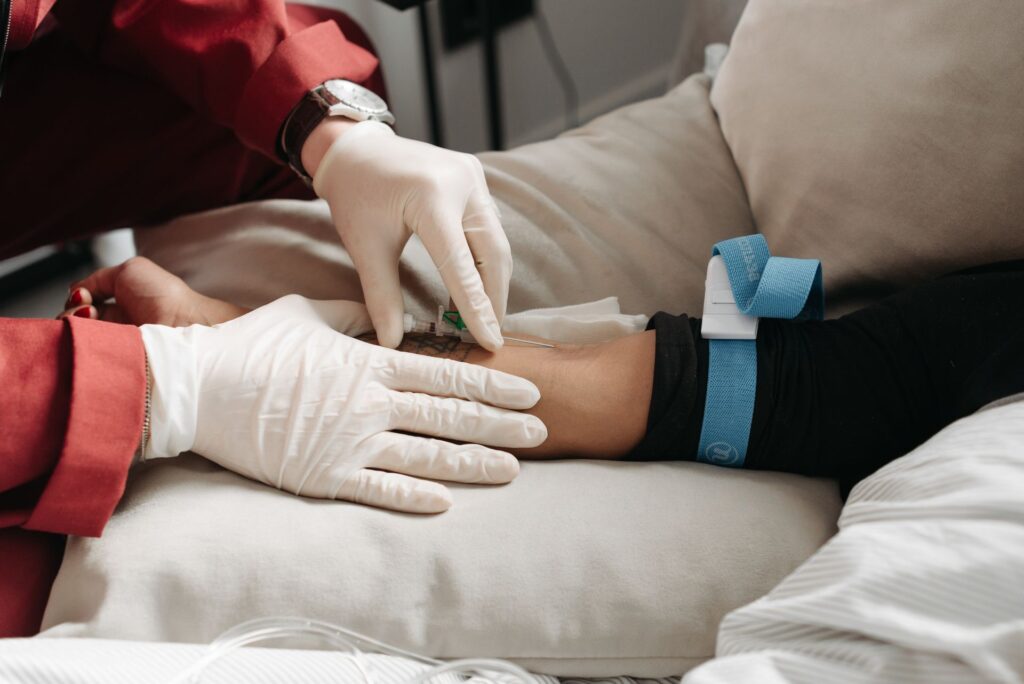
Where those studies describe, a Utrecht study intervenes. It assessed two workflow changes requiring no new infrastructure. Replacing a single-use sterile connection kit with non-sterile protection sheets and compresses for routine fistula cannulation, while retaining full aseptic non-touch technique, reduced the carbon footprint of each cannulation from 0.45 to 0.14 kg CO2-equivalent, a 68.5% cut, with reductions across all 16 impact categories. Configuring machines to drain bloodlines and dialysers automatically before disposal, so the dry plastics could be recycled rather than incinerated as hazardous waste, cut the footprint of a session from 10.68 to 9.69 kg CO2-equivalent. The waste-treatment component of that session fell by 86%, but because manufacturing is untouched the net reduction is 9.3%.
That gap is the paper’s most useful lesson: interventions acting upstream on what is manufactured and opened deliver far larger relative savings than interventions acting only on disposal. It comes with an important limitation, stated by the authors, clinical outcomes were not assessed, and infection rates and vascular access complications were not monitored, so the first intervention would need prospective clinical data before wider adoption, even though current vascular access guidance already recommends aseptic rather than fully sterile technique for routine cannulation.
A fourth study screened a longer list of candidate optimisations, modelling each as applied for a year to one patient dialysing three times a week. Waste optimisation through pyrolysis came out highest on carbon at 735 kg CO2-equivalent, followed by roof-mounted solar at 646 kg and incremental haemodialysis at 316 kg. Not offering cotton blankets saved comparatively little carbon but by far the most water, at 899 cubic metres. At the other end, going paperless and switching light fittings were close to negligible. These are modelled estimates from secondary data, but as a prioritisation exercise they are pointed: a handful of decisions carry most of the benefit.
Related readings
- How to improve the environmental impact in haemodialysis: small actions, big changes
- The role of centre characteristics and type of water treatment plant in the environmental impact of hemodialysis — conference abstract
- Greener dialysis in practice: life cycle assessment of sustainable practice changes in haemodialysis care
- But how green is it actually? Calculating the environmental footprint of kidney care environmental optimizations within haemodialysis
- Life Cycle Assessment Dataset for Kidney Care Environmental Optimisations within Haemodialysis — dataset
- Life Cycle Assessment Dataset For Haemodialysis in Madrid, Spain — dataset
- Life Cycle Assessment Dataset For Haemodialysis in Modena — dataset
*Photo by Ivan S

Beyond carbon: the parts of sustainable kidney care that are still missing

An open library of kidney care life cycle data, free for anyone to reuse
Modality matters less than you think. What happens to the plastic matters more.
